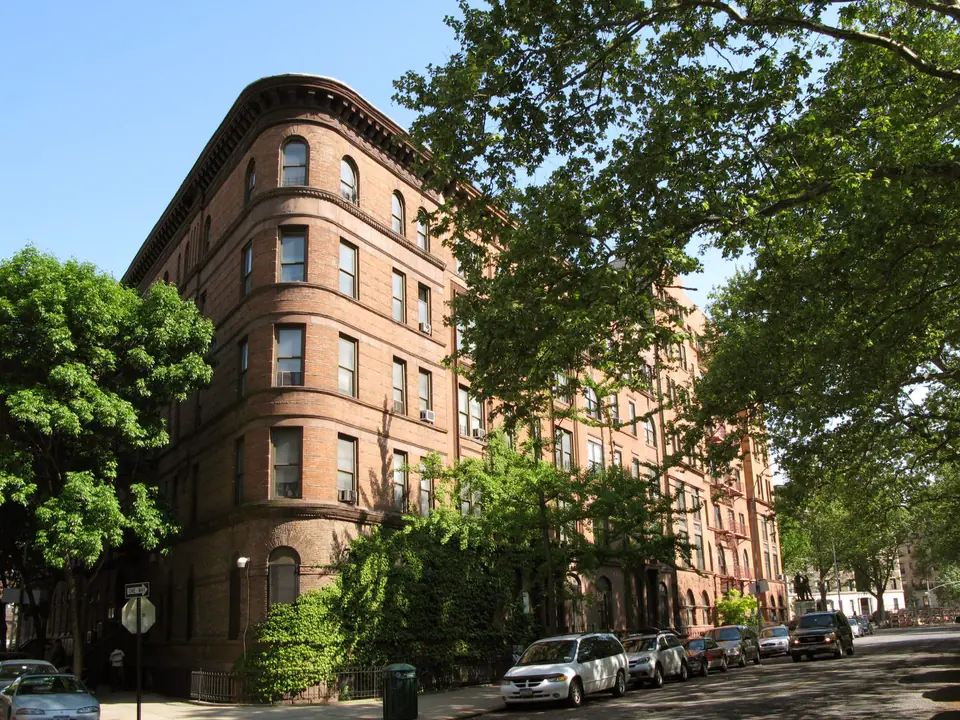
- Location
- Upper Manhattan, New York City
- Main street
- 125th Street
- Landmark
- Apollo Theater, West 125th Street
- Distance to JFK
- 15 miles (23.7 km) straight line
What Harlem is like
Harlem occupies the northern part of Manhattan, starting roughly where Central Park ends at 110th Street and running north to the Harlem River. It is usually split into West Harlem, toward the Hudson, and East Harlem, toward the East River, with 125th Street as the main cross-town street. The grid is the one laid out for most of Manhattan in 1811: numbered streets run east to west, avenues run north to south, and Broadway cuts across on the diagonal.
The neighborhood works at two scales. On the avenues, traffic moves quickly and the buildings are tall, with ground floors given over to shops, churches and services. One block behind, the side streets are quiet rows of brownstones, many with stoops and small front gardens. Ground rises toward the north and west, so several blocks end against steep parkland, and the ridge streets look out over the rest of the island.
History along 125th Street
The name comes from Haarlem in the Netherlands, but Harlem's reputation was made in the twentieth century, when it became the center of Black American cultural life. The Harlem Renaissance of the 1920s brought writers, painters and musicians to the neighborhood, and the churches, theaters and halls that hosted them still shape the streets. Much of the housing dates from the decades before and after that period, which is why the brownstone rows look so consistent.
125th Street is where that history is easiest to read. The Apollo Theater sits on West 125th Street, a landmark for live music and a name known well beyond New York. The street carries offices, shops, churches and transport, and it changes character block by block as you walk from the Hudson side toward the East River. Side streets off it hold churches of many denominations, some in older buildings.
What to see and do
The core of a visit is the street life and the architecture. Walk 125th Street end to end, then turn onto the side streets, where the brownstone rows between the avenues are the reason many people come. Parks give the neighborhood its breathing room: Morningside Park on the western slope, St. Nicholas Park and Jackie Robinson Park further north, Marcus Garvey Park in the middle, and Riverside Park along the Hudson. Central Park's northern edge is at 110th Street.
Museums and cultural spaces in Harlem focus on Black history, art and performance, and several are small enough to see in an hour. The Apollo Theater hosts shows on West 125th Street, and community arts spaces open and close through the year. Sunday is the liveliest day, when churches fill and the streets are busy; weekdays are quieter and better for architecture. Check opening days before setting out, since smaller institutions keep limited hours.
- Hear live music at the Apollo Theater on West 125th Street; check the schedule before booking travel.
- Walk the brownstone side streets between the avenues, where the buildings themselves are the sight.
- Spend an hour in Morningside Park or Marcus Garvey Park, both on higher ground.
- Visit on a Sunday for church services and street life, or on a weekday for quieter streets.
Eating and evenings
Food in Harlem follows the neighborhood's history. Soul food kitchens, Caribbean takeaways, West African restaurants and Latin American counters all sit within a few blocks of 125th Street, alongside delis, bakeries and coffee shops. Portions are often generous and rooms are small, so weekend dinners are easier with a booking or an early arrival. Many independent kitchens close one day a week, and hours shift with the season, so confirm before you set out.
Evenings in Harlem are modest by Midtown standards, and that is part of the appeal. Live music runs from jazz to gospel and soul, sometimes in bars, sometimes in churches and community halls. The Apollo Theater anchors the night on West 125th Street, and a few small venues keep later hours along the avenues. Book ahead for weekend shows, and plan the ride back: the subway runs through the night, so a late finish is manageable.
- Look for soul food, Caribbean and West African kitchens on and around 125th Street.
- Book weekend dinners or arrive early, because small rooms fill quickly.
- Check listings for live music and Apollo Theater shows before you travel.
- Confirm opening days, since many independent kitchens close one day a week.
A walk through Harlem
A good route starts at 125th Street and the Apollo Theater, then heads west along 125th to Riverside Park and the Hudson. Turn north through the brownstone blocks of Hamilton Heights and Sugar Hill, where the streets climb and the architecture is the main draw, then cut east through St. Nicholas Park. Finish at Marcus Garvey Park and walk south to 110th Street, where Central Park begins and the neighborhood ends.
Allow half a day with stops, more if churches or museums are open. The walking is easy on the avenues but steeper on the ridge streets, and there are long open stretches with little shade. Mornings are calm, Sundays are lively, and late afternoon light on the brownstones is the reward for the climb. Break the walk at a park bench or a coffee shop rather than trying to cover every block.
Who Harlem suits and getting around
Harlem suits travelers who have seen the Midtown sights and want a residential side of Manhattan, and anyone drawn to Black American history, gospel music and soul food. Repeat visitors often prefer it: the streets are calmer than the theater district, the buildings are lower, and the neighborhood rewards slow walking. It also works for longer stays, where a kitchen and a quiet block matter more than a hotel lobby.
It suits less well on a first trip of two or three days built around Times Square, the Empire State Building and the museums at Central Park's south end, where the daily ride downtown eats into the day. Travelers who want to step out of the hotel into evening crowds, or who plan late nights in the Theater District, are usually happier closer to Midtown. Light sleepers should ask for a room away from the avenues.
The subway crosses Harlem at several points and runs through the night, and cross-town buses along 125th Street cover the ground the trains do not. Pay by tapping a contactless card or phone, and check the current weekly cap. Times Square is about 4.2 miles (6.8 km) away in a straight line, Grand Central Terminal 4.3 miles (7 km) and Penn Station 4.9 miles (7.9 km). JFK is 15 miles (23.7 km) away; the trip by AirTrain and subway or rail takes about 45 to 75 minutes from Midtown depending on traffic and connections.
Harlem: what it is like and who it suits: questions
What is Harlem known for?
Harlem is known for its central place in Black American culture, for 125th Street and the Apollo Theater, and for long rows of brownstones on the side streets. Gospel music, soul food and jazz are part of the neighborhood's identity, and its parks and higher ground give it a scale that feels different from Midtown Manhattan.
What can you see in Harlem in half a day?
Start on 125th Street and look at the Apollo Theater, then walk the brownstone blocks between the avenues and finish in one of the parks, such as Morningside Park or Marcus Garvey Park. Museums and churches fill a longer visit, and the streets north of 125th Street are quieter and just as rewarding.
Are Sunday gospel services in Harlem open to visitors?
Many Harlem churches welcome visitors to Sunday services, though each sets its own policy. Dress modestly, arrive early, sit where the ushers direct, and avoid filming during worship. Confirm the time and whether visitors are admitted before you go, since schedules and rules change through the year.
How do you reach Harlem from Midtown Manhattan?
The subway is the simplest way: several lines cross Harlem and run through the night, and the ride from Midtown is short. Cross-town buses along 125th Street connect the east and west sides. Pay by tapping a contactless card or phone and check the current weekly cap. A taxi is quicker at night but slower in traffic.
How far is Harlem from JFK airport?
JFK is about 15 miles (23.7 km) from Harlem in a straight line. The usual route is the AirTrain to Jamaica, then the subway or the Long Island Rail Road into Manhattan, or the AirTrain to Howard Beach and the subway from there. Allow 45 to 75 minutes from Midtown depending on traffic and connections.
Is Harlem a good base for a first visit to New York City?
Harlem works well if the trip runs longer than a few days or if the Midtown sights are already familiar. First-time visitors with a short list of Midtown sights often prefer to stay closer to them, since the daily ride south takes time. Harlem rewards people who want a residential neighborhood and a slower pace.
Is Harlem safe for visitors?
Harlem is a residential neighborhood, and visitors spend days and evenings there without trouble. Use the same precautions as anywhere in Manhattan: stay aware on quiet side streets after dark, keep valuables out of sight, and use main avenues at night. Ask where you are staying about the streets nearby.
When is the best time of year to visit Harlem?
Spring and autumn are the mildest seasons, and Central Park's autumn color usually peaks in early to mid November, when the walk north from 110th Street is at its most colorful. December is the busiest holiday period and January to early March the quietest, when churches and museums are easier to visit.