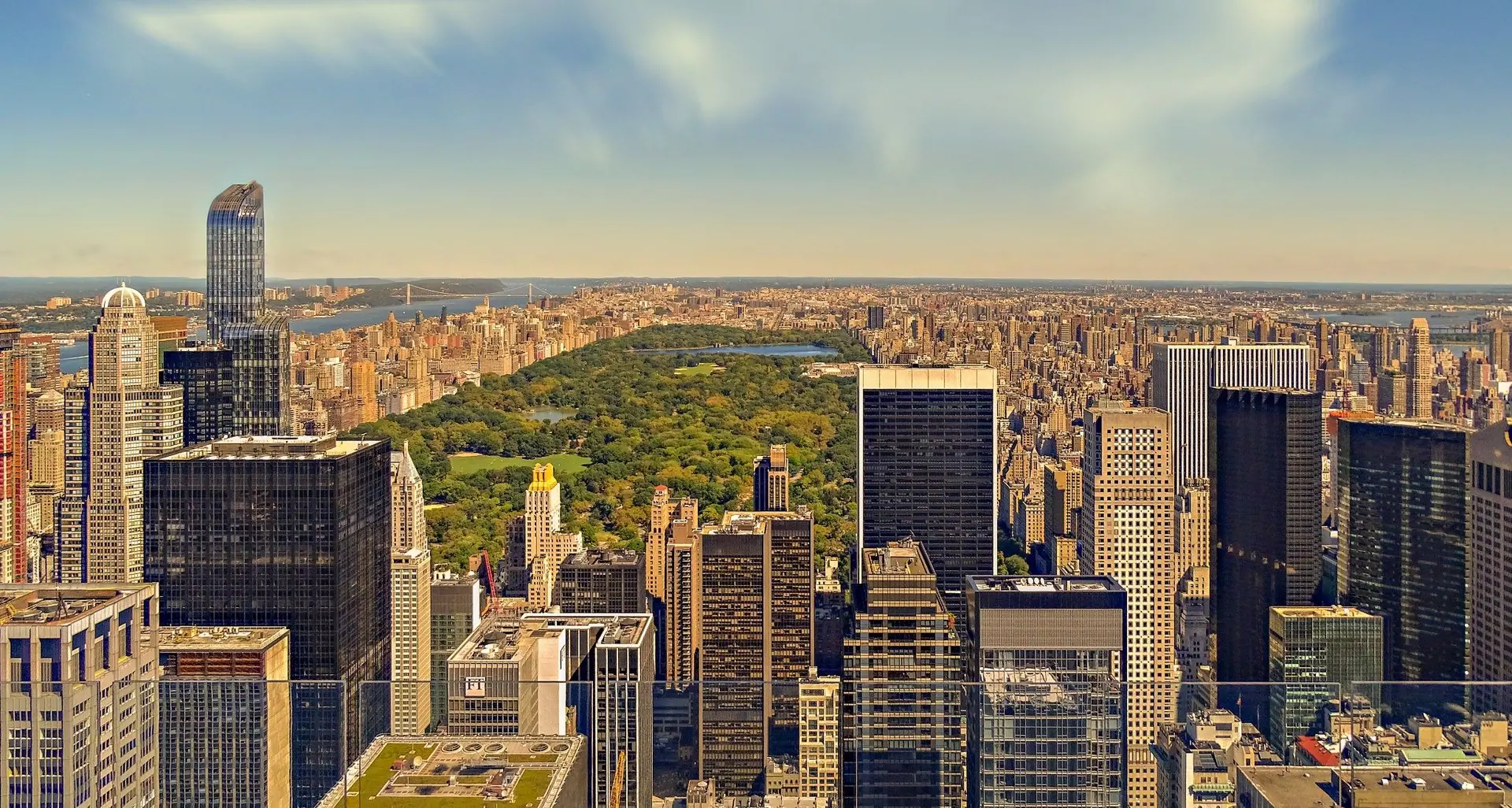
- Size
- 843 acres
- Length
- 2.5 miles × 0.5 mile
- Entry
- Free
- Hours
- 6 am – 1 am
Central Park was designed by Frederick Law Olmsted and Calvert Vaux and first opened in 1858. It stretches from 59th Street to 110th Street, between Fifth Avenue and Central Park West, and splits uptown into the Upper West and Upper East Sides.
Highlights, south to north
- The Pond and Gapstow Bridge — the classic skyline view near 59th Street.
- The Mall and Bethesda Terrace — the park’s grand promenade and fountain.
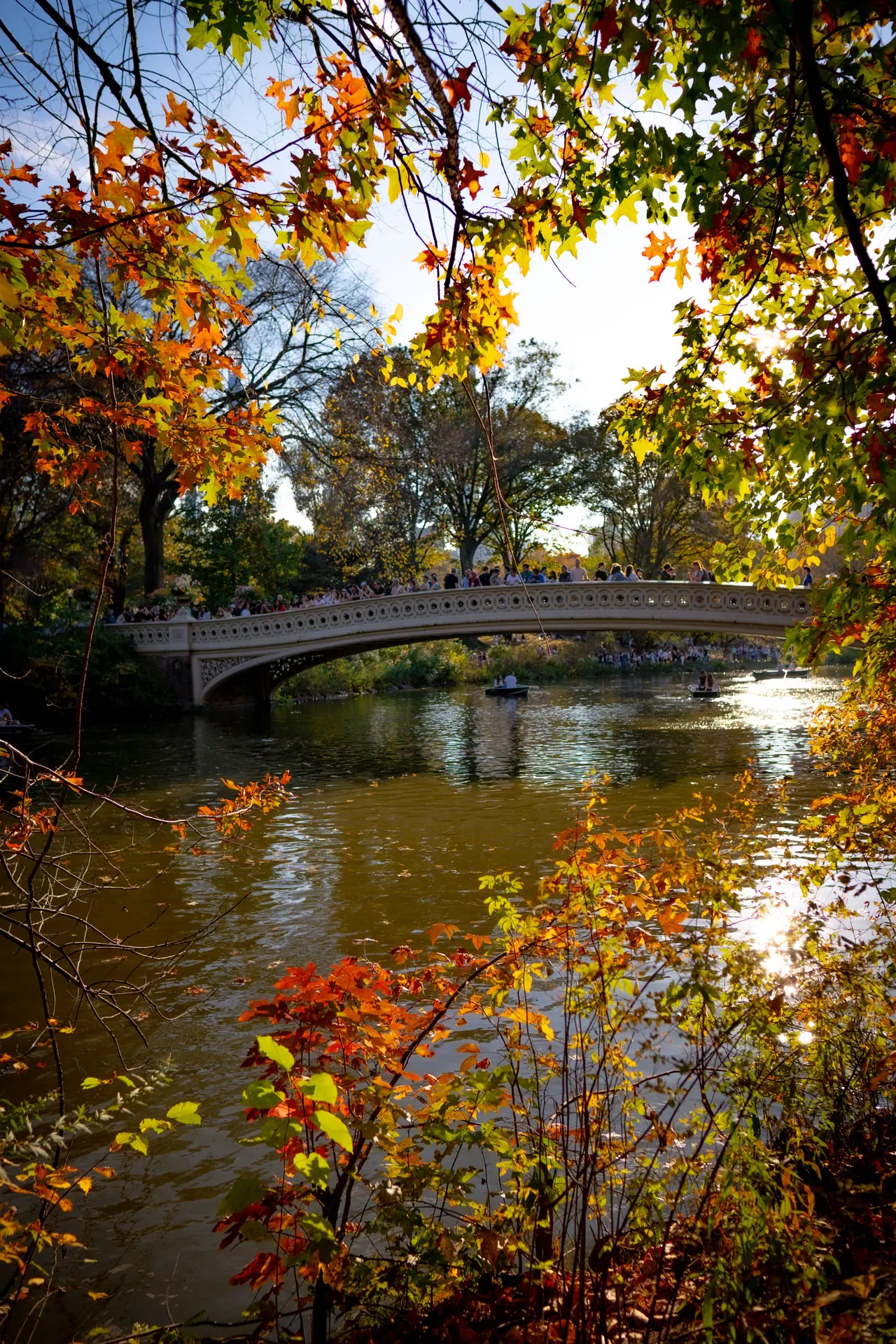
- Bow Bridge — the cast-iron bridge over the Lake, best in autumn.
- Strawberry Fields — the John Lennon memorial near West 72nd Street.
- Belvedere Castle — a miniature castle with views over the Great Lawn.
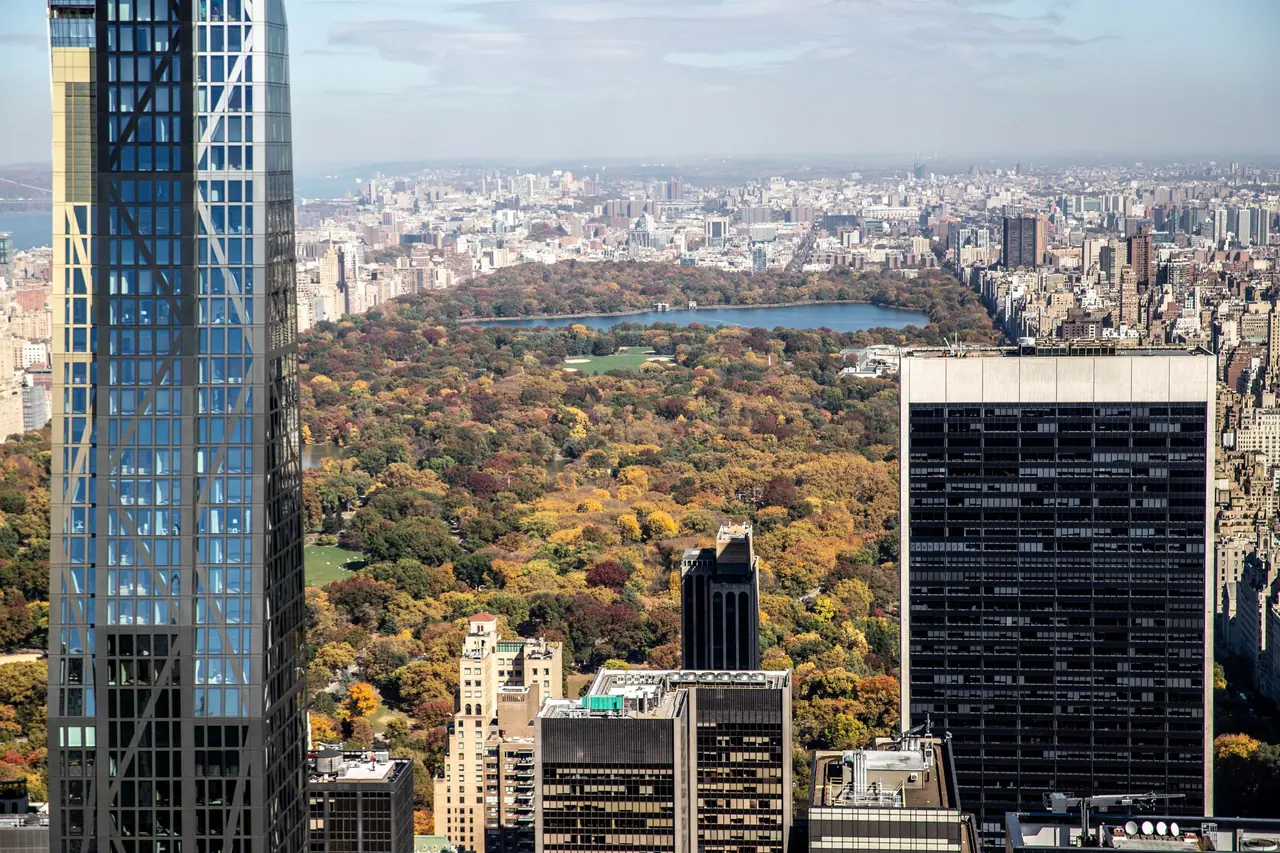
- The Reservoir — a 1.58-mile running loop with skyline reflections.
Staying near the park
Central Park South has the famous park-view hotels. For better value, look at the Upper West Side, a few blocks from the park’s western edge.
How to see it in half a day
- Enter at Fifth Avenue and 60th Street and walk to the Pond.
- Head north up the Mall to Bethesda Terrace and the fountain.
- Cross Bow Bridge and wander the Ramble’s paths.
- Climb to Belvedere Castle, then exit west at 79th Street for the Natural History Museum.
Seasons in the park
Spring brings cherry blossoms around the Reservoir and the Conservatory Garden. Summer has free concerts and Shakespeare in the Park at the Delacorte Theater. Autumn color usually peaks in early November. In winter, there’s skating at Wollman Rink and, after snowfall, the quietest park in the world’s busiest city.
Getting around inside
The full loop drive is about six miles and closed to cars, so it’s shared by runners, cyclists and pedicabs. Bike rentals are available near the southern entrances; pedicab prices are per minute, so agree the total before you set off.
Design Details to Notice
Central Park rewards close looking at how paths, water, and rock outcrops are arranged. Frederick Law Olmsted and Calvert Vaux shaped the park as a sequence of landscapes, with open meadows, wooded turns, and framed views that change as you walk. The design uses grade and vegetation to screen city streets, so a short detour can feel removed from traffic. Notice how bridges and arches carry paths over or under other routes, keeping walks continuous without relying on crosswalks. Stay on marked paths where planting is protected.
The park's edges are part of the design, not just boundaries. Along Fifth Avenue and Central Park West, walls, planting, and entrances mark transitions between street grid and interior scenery. Inside, the Mall's straight promenade, the curves around the Lake, and the more rugged paths in the north show different design intentions. A useful approach is to pick one landscape character per visit rather than trying to cover the whole park. Check current closures and maintenance notices before heading to a specific feature.
Practical Park Navigation
Central Park sits between 59th and 110th Streets and between Fifth Avenue and Central Park West. Use those edges and the cross streets to orient yourself, since numbered streets run east-west and Fifth Avenue divides East from West addresses. Entrances are frequent, but not every entrance connects directly to a major path or avoids stairs. Check current transit service and park notices before a visit, because closures, maintenance, and event setups can change access to particular lawns, paths, or facilities.
Plan by landscape rather than by checklist. A meadow, a woodland path, and a waterside walk can each take more time than expected once you leave the street grid. Carry water and check the weather forecast, because conditions can shift during a long walk. Facilities and programming vary by season, so confirm details with NYC Parks or the park's official information before relying on a specific stop or facility. Allow extra time for detours around closures, crowded paths, or event setups.
Keep reading
Central Park: the complete guide: questions
What makes Central Park a designed landscape rather than open ground?
Central Park was designed by Frederick Law Olmsted and Calvert Vaux and first opened in 1858. Its 843 acres combine meadows, water, wooded paths, and built features into a sequence of views. The result is a planned landscape, not leftover open space. Entry is free, and posted rules govern lawns, paths, and sensitive natural areas.
How does Central Park's location on Manhattan's grid help you navigate?
Central Park lies between 59th and 110th Streets and between Fifth Avenue and Central Park West. Numbered streets run east-west, and Fifth Avenue divides East from West addresses. Use those boundaries and cross streets to orient yourself. Entrances vary in what they connect to, so check a map before choosing a meeting point or route.
Which Central Park features show the designers' hand most clearly?
Look at Bethesda Terrace, the arched bridges, and the transitions between meadow, woodland, and water. These features show how paths and views were arranged rather than left to chance. The park's designers used grade, planting, and built structures to guide movement and screen streets. Check current access to interiors and terraces, since maintenance or events can affect specific spots.
Where can you find quieter paths in Central Park?
The Ramble and the North Woods have winding paths and denser planting than the open lawns. The Conservatory Garden offers a more formal setting. These areas can be quieter at off-peak times, but they are not empty. Stay on marked paths, follow posted rules, and check seasonal closures before planning a route through wooded or garden areas.
When should you plan a Central Park visit around the seasons?
Spring and autumn are the mildest seasons. Summers are hot and humid; winters are cold, with snow some years. Central Park's autumn color usually peaks in early to mid November. December is the busiest holiday period, while January to early March is usually the quietest. Check the forecast and park notices before a visit.
How do water bodies shape a walk through Central Park?
Water is a major organizing element in Central Park. The Lake, the Jacqueline Kennedy Onassis Reservoir, and other water bodies create open views, reflect light, and separate paths into distinct loops. Routes often follow the shoreline before turning into woodland or meadow. Check posted rules and current closures, since access to some edges and paths can change with maintenance or weather.
Can you cross Central Park by vehicle or on foot?
Central Park has separate routes for drivers and pedestrians, with transverse roads crossing the park and paths running through it. Walking routes can be long, so choose an entrance near your destination. Check current traffic rules, closures, and event setups with NYC Parks or the city before planning a crossing. Conditions change with construction and programming.
How does Central Park connect with Manhattan's museum district?
The Metropolitan Museum of Art is on Fifth Avenue at 82nd Street, at the start of Museum Mile, which runs roughly from 82nd to 105th Streets. The American Museum of Natural History is on Central Park West at 79th Street. Both sit beside Central Park, so a visit can combine a walk with a museum stop. Check opening days before setting out.