- Street pattern
- Below 14th Street, irregular
- Subway
- Runs 24 hours, tap to pay
- Penn Station
- About 1.2 miles (1.9 km) north
- LaGuardia Airport
- 7.3 miles (11.8 km) away
What the West Village is like
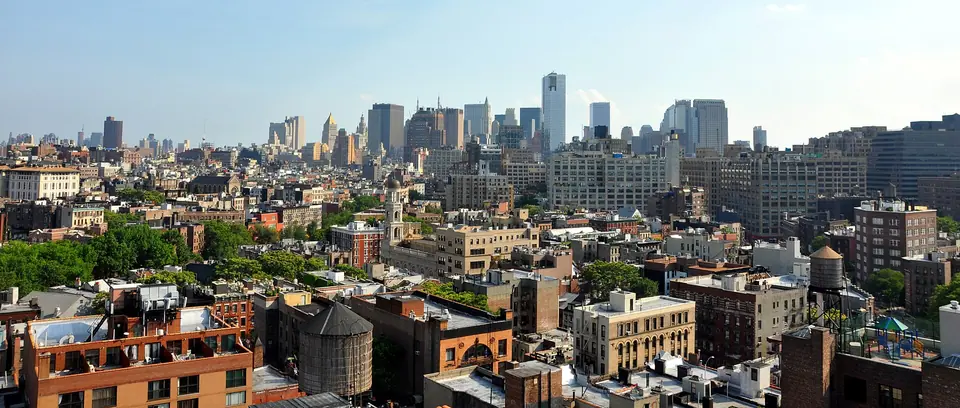
The West Village sits on the west side of Manhattan below 14th Street, with the Hudson River at its back and Seventh Avenue running along its eastern edge. Here the grid of the Commissioners' Plan of 1811 gives way to older named streets that bend, meet at odd angles and sometimes end at the water. The Meatpacking District forms the neighborhood's northern corner, near Gansevoort Street and the start of the High Line.
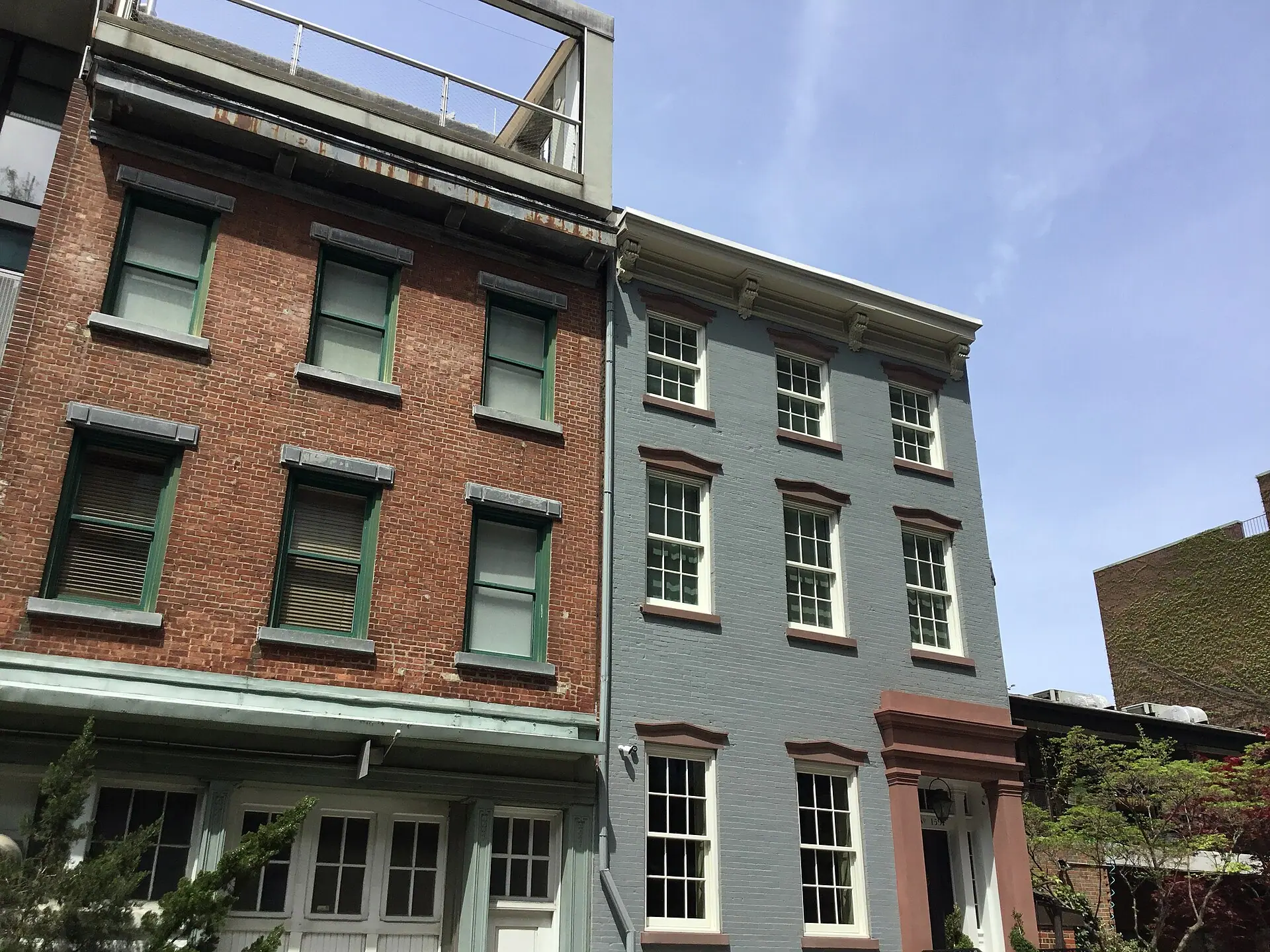
Most of the housing is low rise: rows of brick and brownstone houses with stoops, small front gardens and window boxes, built for families and still lived in as homes. That makes the neighborhood quiet in a way few parts of Manhattan are, especially on weekday mornings and after dark. You will find small shops, corners that open onto gardens and views of the river at the end of the cross streets. Treat the blocks as the residential streets they are.
A short history in the streets
The street pattern carries the history. Greenwich Village grew up around roads that followed old farm tracks and the shoreline, and those routes survived when the 1811 plan laid a grid across the rest of the island north of 14th Street. Broadway still cuts diagonally across the grid. West of Seventh Avenue the lanes keep their names and their angles, which is why a short walk here can turn a corner three times without reaching a numbered street.
The Meatpacking District at the north end takes its name from the trade that once filled its warehouses and market buildings. When that trade moved out, the large floors and cobbled streets were taken over by design studios, galleries and offices, and the district became the neighborhood's busiest corner for visitors. The High Line, an elevated park on a former freight rail line, opened its first section in 2009 and made the old industrial edge a destination in its own right.
What to see and do
Sights cluster along the water and just inland. Hudson River Park runs the length of the western edge, with lawns, piers and a path for walking and cycling; Little Island, a raised park on the water, sits just off the shore. The High Line begins at Gansevoort Street and runs north to West 34th Street at Hudson Yards, where the Vessel stands. All three are free to enter, though the High Line gets crowded in good weather, so early mornings are calmer.
Away from the river, the pleasure is architectural. Walk the blocks between Bleecker Street and the water for rows of early nineteenth century houses, converted stables and small gardens behind low gates. Churchyards and a few older institutional buildings break up the rows. The neighborhood also has a long association with writers and artists, and small galleries still open and close along the side streets. Check current opening days before you set out for a specific gallery.
- Walk the High Line from Gansevoort Street north to West 34th Street, starting early to avoid the crowds.
- Spend an hour in Hudson River Park, where piers, lawns and benches face the water.
- Cross to Little Island for a raised garden and views back along the shore.
- Follow the side streets between Bleecker Street and the river for brownstones and churchyards.
- Continue north to Hudson Yards to see the Vessel and the newer towers.
Eating and evenings
Eating here is mostly small scale. The neighborhood is known for narrow dining rooms with a few tables, corner cafés that serve breakfast and lunch, bakeries, wine bars and a growing number of places with counters rather than tables. The Meatpacking District adds larger rooms, rooftop drinking and late evenings. Reservations help at the weekend, when the popular rooms fill early. Menus and opening days change often, so check the place you have in mind before you go.
Evenings are quiet by Midtown standards. Most of the nightlife sits in the Meatpacking District and along the larger avenues, while the residential blocks go still after dinner. For a calmer night, plan around a meal and a walk rather than a sequence of bars: the walk along the Hudson is the point of being here. If you want the Broadway theaters, they cluster around Times Square, about 1.8 miles (2.9 km) north, which is a short subway ride or a brisk walk.
A walk through the neighborhood
Start at the northern edge, near 14th Street and Eighth Avenue, and head south into the side streets. A loose route: cross to Greenwich Avenue, follow it south, then turn west toward Bleecker Street and the water. The blocks between Bleecker and West 4th Street hold some of the oldest houses in the neighborhood, and the streets bend enough that you can walk a long way without seeing a numbered cross street. Carry a map or use your phone; the corners confuse most visitors.
Finish at the water. Hudson River Park gives you a continuous path north and south, with benches facing New Jersey across the river. From there you can walk north to the High Line entrance at Gansevoort Street and climb to the elevated walkway, or continue south toward Battery Park for the Staten Island Ferry. The route is flat and easy on foot; the only climb is the stairs or elevator up to the High Line.
- Begin near 14th Street and Eighth Avenue, then head south on Greenwich Avenue.
- Turn west at Bleecker Street and follow the side streets to the river.
- Rest on a bench in Hudson River Park and watch the traffic on the Hudson.
- Climb to the High Line at Gansevoort Street and walk north to Hudson Yards.
Who it suits, and getting around
The West Village suits travelers who want a quiet base with real streets to walk at night. It rewards people who like food, architecture and long walks more than big sights, and couples or solo travelers who plan to be out all day and want somewhere calm to return to. It also works well for a first visit if you are happy to use the subway, since most of Manhattan is a short ride away.
Stay elsewhere if you want the theaters, the big museums or a room with a view of the skyline from the window. Midtown puts you closer to Broadway and Central Park; the Upper West Side and Upper East Side put you beside the parks and museums; the Financial District is closer to the 9/11 Memorial and the ferries. Travelers who want a large hotel with full services will find more choice in those areas. Light sleepers should ask for a room away from the Meatpacking District.
When you choose a base here, weigh the walk to the subway against the quiet of the side streets. Rooms facing the Meatpacking District are livelier at night; blocks west of Hudson Street are calmer. Check the total price with taxes and fees, since city hotel bills add taxes and a per-night occupancy charge. The subway runs 24 hours a day and fares are paid by tapping a contactless card or phone. Penn Station is about 1.2 miles (1.9 km) north; LaGuardia is closest by road, while JFK and Newark need a transfer.
The West Village: streets, parks and evenings: questions
What makes the West Village different from the rest of Manhattan?
The street layout. North of 14th Street most of Manhattan follows the grid of the Commissioners' Plan of 1811, with numbered streets running east to west. The West Village keeps older named streets that bend and meet at odd angles, lined with low brick and brownstone houses. The result is a quiet, low-rise district with the Hudson River at the end of many cross streets.
Is the West Village a good base for a first visit to Manhattan?
It can be, if you are happy to use the subway. Times Square and Grand Central Terminal are about 1.8 miles (2.9 km) away, Penn Station about 1.2 miles (1.9 km), and Central Park about 2.5 miles (4.1 km), so the big sights are a short ride rather than a walk. You get quiet streets and small restaurants in exchange for stepping away from the center.
How do you reach the West Village from the airports?
From JFK, take the AirTrain to Jamaica for the Long Island Rail Road or the subway, or to Howard Beach for the A train. From Newark, the AirTrain connects to NJ Transit or Amtrak into Penn Station, about 1.2 miles (1.9 km) north of the neighborhood. LaGuardia is closest by road, with the free Q70 bus link to the subway. Allow 45 to 75 minutes depending on traffic.
Can you walk the West Village in an evening?
Yes. The neighborhood is flat and compact, so an evening walk can take in the side streets between Bleecker Street and the river. Hudson River Park has a continuous path along the water, and the High Line entrance at Gansevoort Street is a short walk inland. Check park and High Line closing times before you set out.
How far is the West Village from Times Square and the theaters?
Times Square and Grand Central Terminal are each about 1.8 miles (2.9 km) away, and Broadway's theaters cluster around Times Square in the Theater District. Evening curtains are typically at 7 or 8 pm, so check the show you plan to see. A subway ride covers the distance quickly, and a walk back south after the performance is possible in fine weather.
What is the Meatpacking District like within the West Village?
It is the neighborhood's northern corner, near Gansevoort Street, and the liveliest part for visitors. Warehouses and market buildings from its meat trade now hold design studios, galleries, offices and larger dining rooms, with rooftop bars in the evenings. The High Line starts here and runs north to West 34th Street. Expect more noise at night than on the residential blocks to the south.
When is the best time of year to visit the West Village?
Spring, from April to June, and autumn, from September to November, are the mildest seasons for walking. Autumn color in Central Park usually peaks in early to mid November. December is the busiest holiday period, with Fifth Avenue window displays and the Rockefeller Center tree, and January to early March is usually the quietest. Summer is hot and humid.
Do you need to book restaurants in the West Village?
Small dining rooms fill quickly, especially on Friday and Saturday evenings, so a reservation helps. Many places hold tables for walk-ins at the counter or at the bar, and lunch is usually easier than dinner. Menus, opening days and reservation policies change, so check with the place you have in mind on the day. The Meatpacking District has larger rooms with more space.