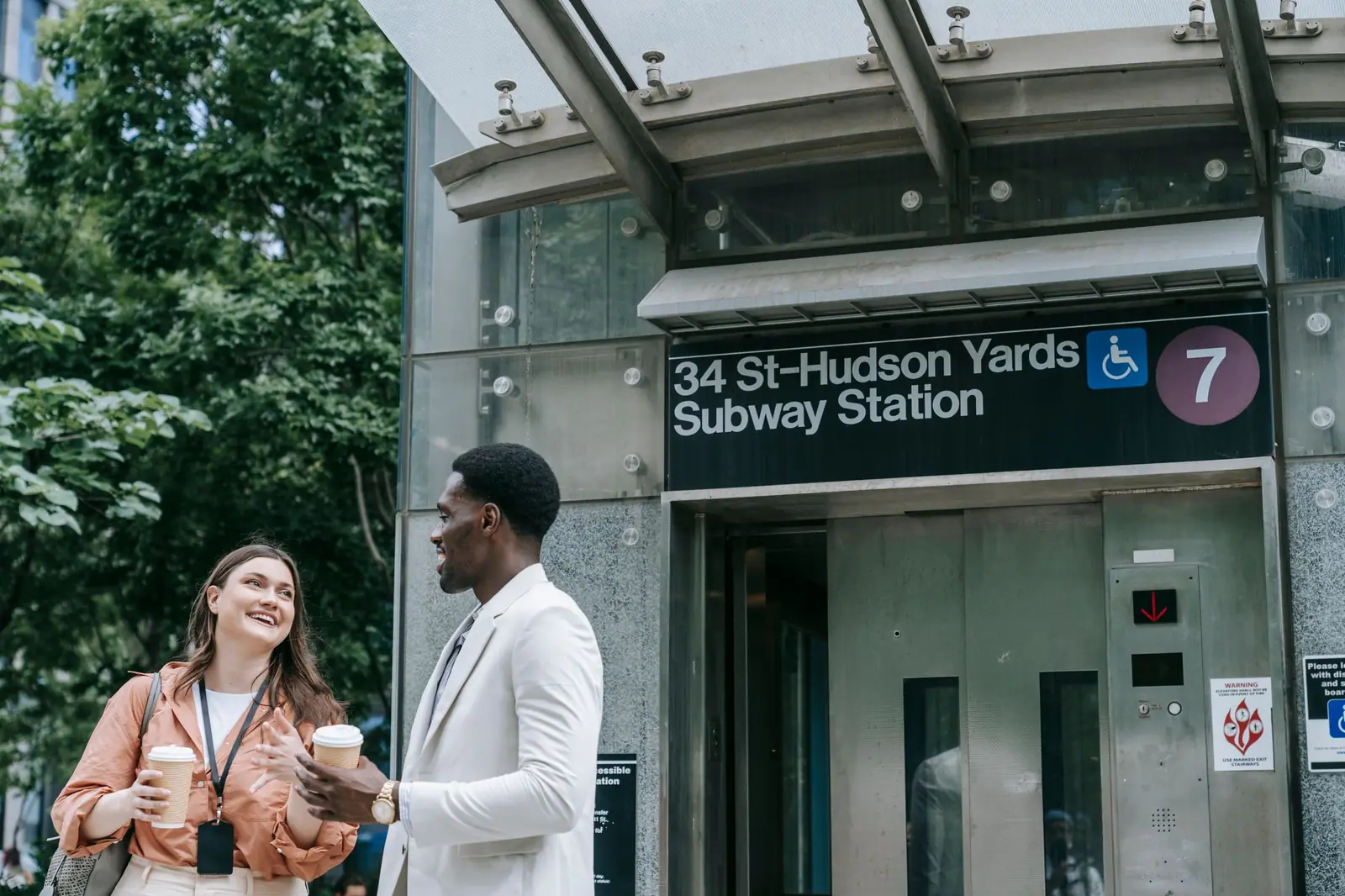
- Subway
- Runs 24 hours a day
- Central Park
- 843 acres, free to enter
- Staten Island Ferry
- Free, crossing about 25 minutes
- Airport transfer
- JFK and Newark, 45 to 75 minutes
What to check before you book
Manhattan is dense and much of it is walkable, but accessibility varies from block to block and from building to building. Book a room near a step-free station or plan to use buses and for-hire vehicles instead. Confirm the details that matter to you: an entrance without steps, an elevator to the room, a roll-in shower, a room wide enough to turn. Ask for the total price with taxes and fees, since hotel bills in New York City add state and city taxes and a per-night occupancy charge.
Say what you need when you reserve, not when you arrive. A written confirmation is easier to rely on than a phone call, particularly for an accessible room, so ask for one that lists the access features and the room type. Ask whether the entrance, lobby and elevators are step-free and whether the room is on a served floor. If you use a mobility scooter, mention its size, because turning space and door widths vary. Note whether a step-free station or a useful bus route is close by.
Subway, bus and street level
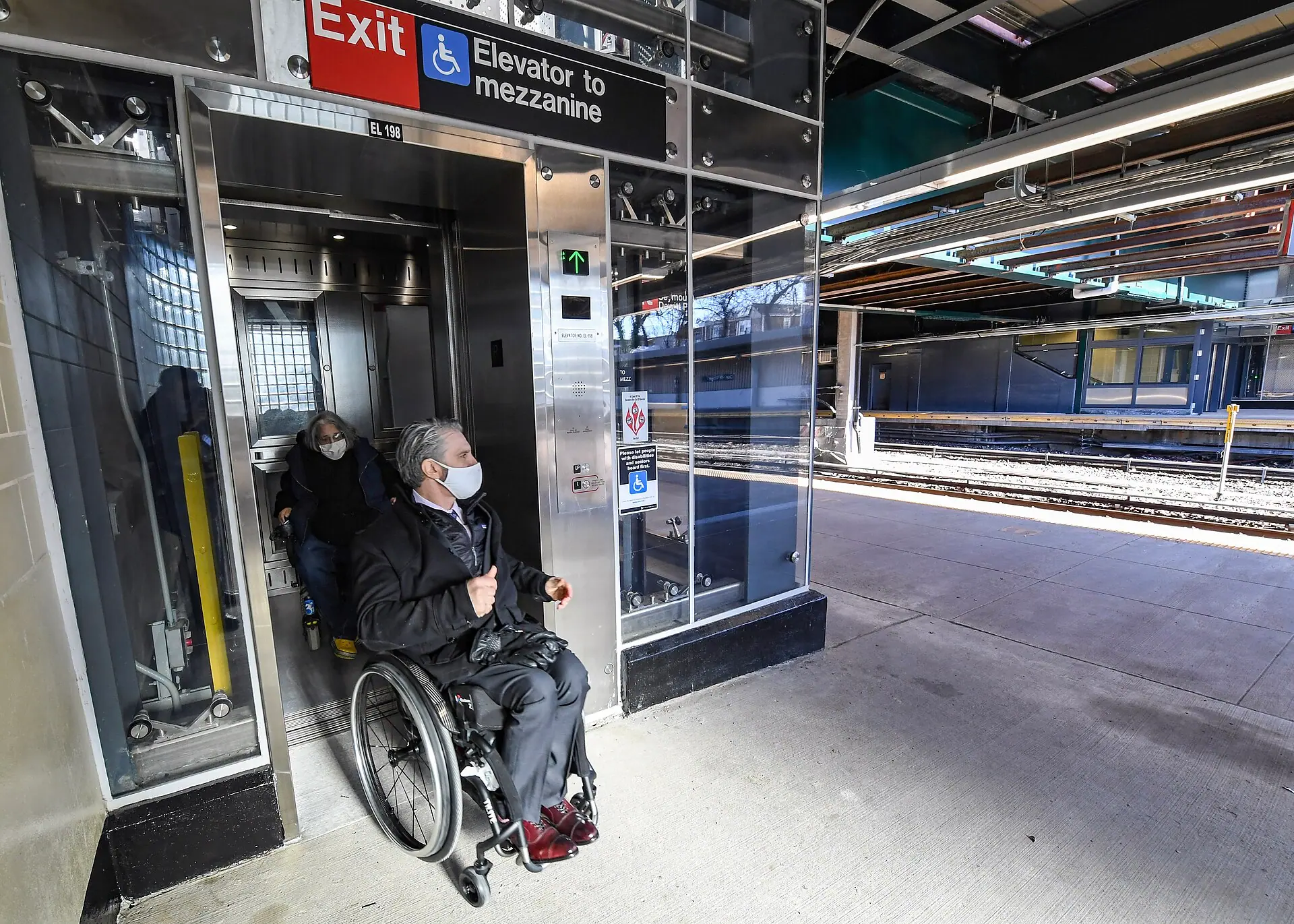
The subway runs 24 hours a day and fares are paid by tapping a contactless card or phone, with weekly spending capped after a set number of rides. Step-free access is not universal. Many older stations have stairs and no elevator, and elevators go out of service for maintenance. Check the transit authority's accessibility information for the stations on your route on the day you travel, and keep a bus route in mind as a fallback. Buses kneel at the curb and have space for a wheelchair.
Streets north of 14th Street follow the grid, with numbered streets running east-west and avenues north-south; Fifth Avenue divides East from West. Sidewalks in Midtown East are wide but crowded at rush hour, and curb cuts are common though not guaranteed at every corner. Crossing times vary, and wide avenues may need two signals. In winter, snow and slush can block ramps for days. Congestion pricing applies to vehicles entering Manhattan below 60th Street. Below 14th Street the streets are older, named and irregular, so routes bend and blocks change length.
- Tap the same card or phone all week so the system can track spending toward its cap.
- Ask station staff about elevators before entering, and check service updates on the day.
- Buses kneel at the curb and carry wheelchair users; board at the front.
- Add time for crosstown trips in Midtown East, where several blocks separate the avenues.
Arriving from the airports
Three airports serve New York City, and each has its own route into Manhattan. From JFK in Queens, the AirTrain connects to Jamaica for the Long Island Rail Road or the E, J and Z subway lines, and to Howard Beach for the A train. LaGuardia is closest by road, and the free Q70 LaGuardia Link bus connects to the subway. From Newark Liberty in New Jersey, the AirTrain reaches the airport rail station for NJ Transit or Amtrak trains to Penn Station.
Allow 45 to 75 minutes from JFK or Newark to Midtown, depending on traffic and connections. Ask at each airport's information desk about assistance between terminals, and confirm with the airline before flying whether a wheelchair or an escort is arranged. At Penn Station and Grand Central Terminal, ask staff to point out the step-free route to the street or the subway, because the layouts are complex and elevators are not always where you expect them. Build in extra time at peak hours and in bad weather.
Museums and observation decks
The Metropolitan Museum of Art is on Fifth Avenue at 82nd Street, at the start of Museum Mile, and the American Museum of Natural History is on Central Park West at 79th Street. Both are large, and a single wing can fill a morning. Ask at the entrance about step-free routes between galleries, loaner wheelchairs and elevators to the floors you want. The 9/11 Memorial's two reflecting pools are free to visit; the museum beside them is ticketed. Say at the desk if you need to avoid stairs entirely.
Observation decks differ in how you reach them and in what the top is like. One World Observatory occupies floors 100 to 102 in the Financial District. SUMMIT One Vanderbilt stands next to Grand Central. Edge, at Hudson Yards, has an outdoor deck with a glass floor on the 100th floor. Top of the Rock takes up floors 67 to 70 of Rockefeller Center, and the Empire State Building has an open-air 86th floor deck and a 102nd floor level. Ask each about elevator access and seating.
- Book a timed entry where one is offered, and say at booking if you need a step-free route.
- Ask about loaner wheelchairs at museum entrances before you set off through the galleries.
- Theater District houses number about 40; ask the show about accessible seating when you book.
- Glass floors and open-air decks suit some people and not others; check what each involves.
Parks, water and the ferry
Central Park covers 843 acres between 59th and 110th Streets, was designed by Frederick Law Olmsted and Calvert Vaux and first opened in 1858. Entry is free. The drives are broad and paved, which makes them easier going than the narrower paths, and benches are frequent. The High Line is an elevated park on the West Side, from Gansevoort Street to West 34th Street at Hudson Yards. It is free, with elevator access at some entrances; check which are open.
The Staten Island Ferry is free, leaves from Whitehall Terminal at the southern tip of Manhattan and passes the Statue of Liberty; the crossing takes about 25 minutes. Boarding is at street level, but the gangway shifts with the tide, so ask staff for help if you need it. Ticketed ferries to the Statue of Liberty and Ellis Island leave from Battery Park. Staying aboard for the return crossing is a simple way to see the harbor without landing. Allow time to board, and travel outside peak hours if you can.
A realistic daily plan
Manhattan rewards short bursts rather than long marches. Pick one anchor for the morning, such as a museum or a stretch of Central Park, and keep the afternoon loose. Distances look small on a map and feel longer at street level, so plan two or three stops rather than six. Summer heat and humidity tire people quickly, and winter cold and slush slow everyone down. Spring and autumn are the mildest seasons for time outdoors. Central Park's autumn color usually peaks in early to mid November.
Build a sit-down break into the middle of the day and think about where it will happen. Midtown East has indoor space to wait out rain or heat, including Grand Central Terminal and the large museums. If an elevator is out at a subway station, a bus or a for-hire vehicle may be the quicker answer. December is the busiest holiday period, when the Rockefeller Center tree is lit and Fifth Avenue windows draw crowds; January to early March is usually the quietest.
Getting Around Manhattan with Reduced Mobility: questions
Which Manhattan subway stations have step-free access?
There is no short list that stays accurate. Older stations often have stairs and no elevator, and elevators go out of service for maintenance. Check the transit authority's accessibility information for the stations on your route on the day you travel, and keep a bus route in mind. Buses kneel at the curb and carry wheelchair users.
Can a wheelchair user visit Central Park in Manhattan?
Central Park is free to enter and covers 843 acres between 59th and 110th Streets. The drives are broad and paved and easier going than the narrower paths, and benches are frequent. Some routes slope or turn to gravel. Check the park's own accessibility information before choosing a route, and pick a single section rather than attempting the whole park.
How do you reach Manhattan from JFK with reduced mobility?
From JFK, the AirTrain connects to Jamaica for the Long Island Rail Road or the E, J and Z subway lines, and to Howard Beach for the A train. Allow 45 to 75 minutes to Midtown depending on traffic and connections. Ask the airport information desk about assistance between terminals, and confirm with the airline that a wheelchair or escort is arranged.
Can you board the Staten Island Ferry in Manhattan without stairs?
The ferry is free and leaves from Whitehall Terminal at the southern tip of Manhattan, passing the Statue of Liberty on a crossing of about 25 minutes. Boarding is at street level, but the gangway shifts with the tide, so ask staff for help. Staying aboard for the return trip is a simple way to see the harbor.
Do Manhattan museums provide wheelchairs for visitors?
Ask at the entrance. The Metropolitan Museum of Art on Fifth Avenue at 82nd Street and the American Museum of Natural History on Central Park West at 79th Street are both large, so a loaner wheelchair can save a long walk between galleries. Say at the desk if you need to avoid stairs entirely, and ask about elevators to the floors you plan to visit.
Are Manhattan observation decks accessible by elevator?
Each building handles access differently. One World Observatory is on floors 100 to 102, SUMMIT One Vanderbilt is next to Grand Central, Edge at Hudson Yards has an outdoor deck with a glass floor on the 100th floor, Top of the Rock occupies floors 67 to 70 of Rockefeller Center, and the Empire State Building has an 86th floor open-air deck and a 102nd floor. Ask about elevator access and seating.
What should you confirm before booking an accessible hotel room in Manhattan?
Ask whether the entrance, lobby and elevators are step-free and whether the room is on a served floor. Request a roll-in shower or turning space in writing, and mention a mobility scooter's size if you use one. Ask for the total price with taxes and fees, since New York City hotel bills add state and city taxes and a per-night occupancy charge.
When is the quietest time for an accessible Manhattan visit?
January to early March is usually the quietest stretch, which means shorter lines at museums and observation decks. December is the busiest holiday period, when the Rockefeller Center tree is lit and Fifth Avenue windows draw crowds. Spring and autumn are the mildest seasons for time in Central Park, and autumn color usually peaks in early to mid November.