- Borough
- One of five New York City boroughs
- Subway hours
- Runs 24 hours a day
- Payment
- Tap a contactless card or phone
- Ferry
- Staten Island Ferry is free
Subway basics
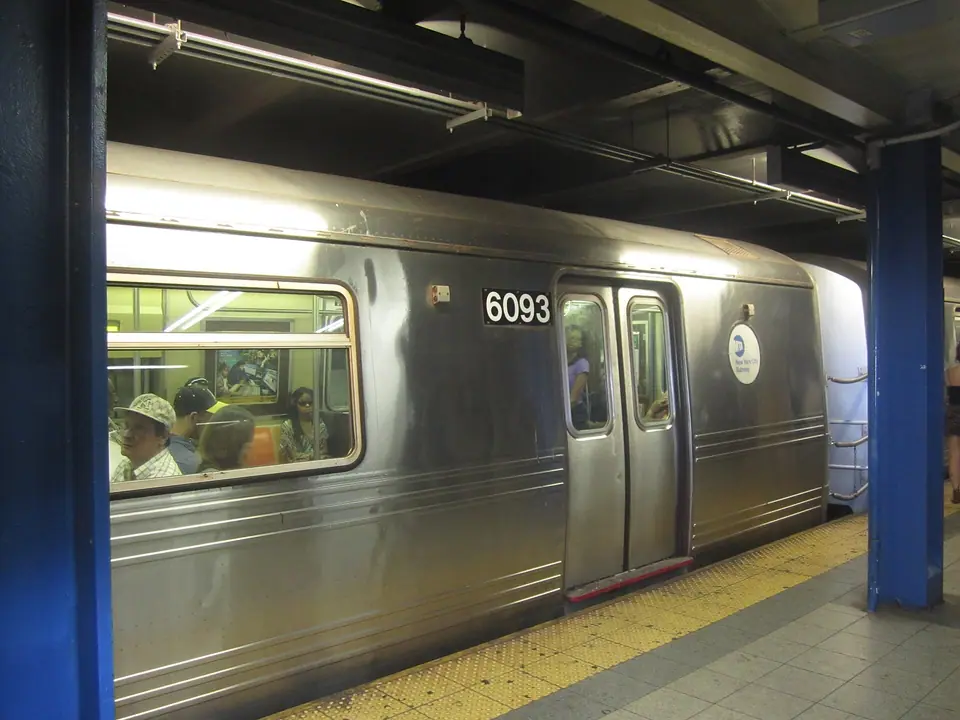
The subway is the fastest way to cover long distances in Manhattan. Trains run 24 hours a day, so there is no last service to plan around. Lines follow the avenues north to south, with cross-town connections in Midtown and downtown. Most journeys need no planning beyond knowing your direction: uptown means north, downtown means south. Broadway carries its own line beneath it, which helps when your start and finish sit off the avenues.
Fares are paid by tapping a contactless bank card or phone at the turnstile under the OMNY system. The MetroCard is being phased out, so visitors arriving with an old card should plan to switch to tap to pay. Weekly spending on the same card is capped after a set number of rides in seven days. Check the current cap and any service changes with the MTA before you travel, since weekend work often closes lines.
- Tap the same card or phone each time so the weekly cap counts your rides.
- Read the platform signs for the direction and the line, not just the station name.
- Service changes are common at weekends, so check the MTA website or app before traveling.
- Stand to the side of the platform doors and let passengers off before you board.
Buses and crosstown trips
Buses fill the gaps the subway leaves, especially on cross streets. Most subway lines run north to south along the avenues, so a trip from the East Side to the West Side at the same street number can take far longer underground than it would above ground. A few routes cross Central Park and link the Upper East Side with the Upper West Side. Buses also serve the streets below 14th Street, where the old street pattern breaks the grid and stations sit further apart.
Buses are slower than trains in traffic, but you see the city and you avoid the stairs. Board at the front, tap the same contactless card or phone you use on the subway, and pull the cord or press the strip before your stop. Routes and frequencies change, and weekend diversions are common, so check the MTA website or app for the current schedule rather than relying on a printed map.
Walking the grid
Walking covers Manhattan well and is often the quickest way to cross it. The Commissioners' Plan of 1811 laid out numbered streets running east to west and avenues running north to south, with Fifth Avenue dividing East from West street numbers. Once you understand that, addresses become instructions: an avenue and a street number tell you exactly where to stand. Most of the island north of 14th Street follows the grid, and the blocks are shorter than they look on a map.
Long blocks run north to south along the avenues and short blocks run east to west along the streets, so a walk of ten streets is much shorter than a walk of ten avenues. Below 14th Street the grid gives way to older, named and irregular streets in Greenwich Village, SoHo, the Lower East Side and the Financial District. Broadway cuts diagonally across the grid everywhere, breaking the pattern at Times Square and Herald Square. Carry a charged phone with a map.
Taxis and ride apps
Yellow taxis are metered and licensed, and they are easiest to find in Midtown, at Penn Station and Grand Central, and around Times Square. Raise an arm at the curb; the roof light tells you whether the cab is free. Ride apps work on the same principle, with the price agreed before you set off, though surge pricing during rain, rush hour or a theater curtain can make them expensive.
Traffic decides which is quicker. A taxi across Midtown at midday can sit still for a long time, while the same trip on the subway takes minutes. Taxis earn their place late at night, with luggage, in bad weather, and for trips the subway serves poorly, such as across Central Park or out to LaGuardia. At night, choose a licensed cab or a booked app ride rather than an unmarked car, and confirm the total price with taxes and fees.
Arriving from the airports
All three New York area airports sit outside Manhattan, and each needs a different connection. From JFK in Queens, the AirTrain reaches Jamaica, where the Long Island Rail Road or the E, J and Z subway lines continue to Manhattan, or Howard Beach, where the A train does. From Newark Liberty in New Jersey, the AirTrain reaches the Newark Liberty International Airport station, then NJ Transit or Amtrak runs to Penn Station. The AirTrain is paid for separately from the subway and commuter trains.
LaGuardia is the closest airport by road, and the free Q70 LaGuardia Link bus connects the terminals to the subway in Queens. Allow 45 to 75 minutes from JFK or Newark to Midtown, depending on traffic and connections, and allow more at rush hour. A taxi from LaGuardia is the shortest road trip of the three, though the bridge and tunnel traffic into Manhattan can still be slow. Confirm the total price with taxes and fees before you set off.
- JFK: the AirTrain to Jamaica for the Long Island Rail Road or the E, J and Z trains.
- JFK: the AirTrain to Howard Beach for the A train.
- Newark: the AirTrain to the rail station, then NJ Transit or Amtrak to Penn Station.
- LaGuardia: the free Q70 bus to the subway, or a taxi for the shortest road trip.
Stations, transfers and the ferry
Grand Central Terminal at 42nd Street and Park Avenue, Penn Station between Seventh and Eighth Avenues at 34th Street, and the Port Authority Bus Terminal at 42nd Street and Eighth Avenue are the three hubs you are most likely to use. Grand Central is worth ten minutes even if you are not catching a train. Transfers inside the subway system are free while you stay behind the turnstiles, and many stations connect underground to nearby lines. Check the MTA for the current transfer rules at each station.
The Staten Island Ferry is free, leaves from Whitehall Terminal at the southern tip of Manhattan and passes the Statue of Liberty, with a crossing of about 25 minutes. It is a fine way to see the harbor without a ticket. Ferries to the Statue of Liberty and Ellis Island are ticketed and leave from Battery Park. Ferry schedules change through the year, so check times and tickets with the operator before you set out.
Getting Around Manhattan: questions
How do you pay for the subway when getting around Manhattan?
Fares are paid by tapping a contactless bank card or phone at the turnstile under the OMNY system. The MetroCard is being phased out, so plan to tap to pay. Weekly spending on the same card is capped after a set number of rides in seven days. Check the current cap with the MTA before you travel.
Is the subway a sensible way to get around Manhattan late at night?
Trains run 24 hours a day, so late trips are possible every night. Wait on the platform near other passengers and ride in a car with people in it. Service changes are common at weekends and overnight, so check the MTA website or app before you go. Taxis are the alternative for short late trips across Midtown.
When is walking quicker than taking the subway to get around Manhattan?
For short hops and crosstown trips, walking often wins. Subway lines mostly run north to south along the avenues, so crossing from the East Side to the West Side at the same street number can take longer underground than on foot. The east-west blocks between avenues are short, and the grid makes addresses easy to follow above 14th Street.
Do you need a taxi from the airports when getting around Manhattan?
Not always. From JFK, the AirTrain connects to Jamaica for the Long Island Rail Road or the E, J and Z trains, and to Howard Beach for the A train. From Newark Liberty, the AirTrain reaches the rail station, then NJ Transit or Amtrak runs to Penn Station. LaGuardia has the free Q70 bus to the subway. A taxi is quicker only when traffic allows.
How long does the subway take compared with getting around Manhattan by bus?
The subway is faster over any real distance, because buses share the streets with traffic. Buses work well for crosstown trips and for the streets below 14th Street, where subway stations sit further apart. Routes and frequencies change, and weekend diversions are common, so check the MTA website or app before you set out.
How does getting around Manhattan from Times Square to the Upper East Side work?
Head uptown on the subway, which runs north along the avenues, and check the MTA for the line that serves your address, since several lines stop near Times Square. A bus uptown followed by a crosstown ride across the park avoids stairs but takes longer. A taxi suits luggage, though Midtown traffic can be heavy.
Can you tap to pay on Manhattan buses as well as the subway?
Yes. Board at the front and tap the same contactless card or phone you use at the subway turnstiles, and the weekly cap counts both. Pull the cord or press the strip before your stop. The MetroCard is being phased out. Check the MTA for the current cap and for any route changes before you travel.
Does congestion pricing affect getting around Manhattan by taxi or car?
Vehicles entering Manhattan below 60th Street pay a toll under congestion pricing, in force since January 2025. Trips by taxi and app that cross the zone are subject to a charge as well. Check the current rules with the MTA, and confirm the total price with taxes and fees before you book a car.