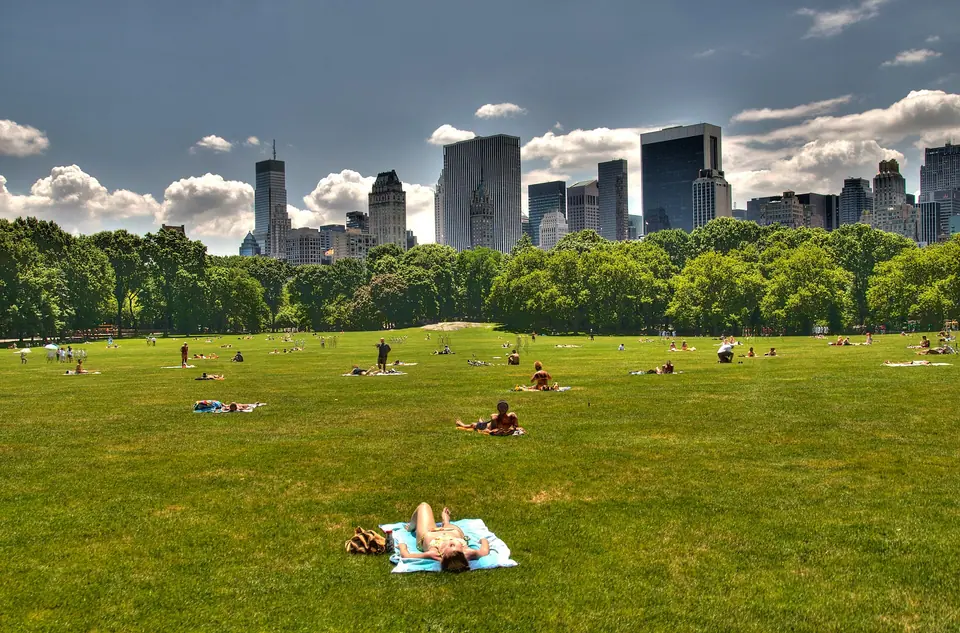
- Season
- June to August, hot and humid
- Area
- Lincoln Square, Upper West Side
- Free entry
- Central Park, the High Line
- Sunset alignment
- Manhattanhenge, usually mid-July
How hot summer gets
Summer in Manhattan is hot and humid, and the heat behaves differently from block to block. Streets lined with tall buildings trap warm air and offer little shade at midday, while parks with mature trees stay noticeably cooler. Plazas and open stone surfaces hold the day's heat into the evening. July and August are usually the steamiest weeks, and the city can issue heat advisories when the combination of temperature and humidity becomes dangerous. Spring and autumn are the mildest seasons, which is why many repeat visitors avoid midsummer altogether.
Timing matters more than distance. A walk across the middle of the island at two in the afternoon feels far longer than the same walk at eight in the morning. Subway platforms are hot and often unventilated, so carry water before you go underground. Park drinking fountains are free and widely spaced in Central Park and Riverside Park. If the city issues a heat advisory, shift the day indoors and save the walking for after the sun drops.
Free outdoor events
Much of the summer calendar in Manhattan costs nothing. Parks and public plazas host concerts, film screenings, dance performances and readings from June through August, mostly in the evening. Central Park, Bryant Park, Riverside Park, Hudson River Park and the High Line all run outdoor programming. Schedules appear in late spring and change from year to year, so check the city parks department listings and each park's own calendar a week before you plan an evening around one.
Arrive early. Lawn space at a free film or concert fills quickly, and the shade at the back of a lawn goes first. Bring a blanket or a light layer, since evenings cool down after sunset even on hot days. Events are usually cancelled when storms are forecast, and organizers announce changes on the day. Free does not mean uncrowded, so treat a popular screening as you would any other crowded summer gathering and keep bags close.
- Central Park hosts free concerts and film screenings on summer evenings; check the schedule before you go.
- Bryant Park runs free outdoor film nights and lawn programs; confirm the season's dates.
- The Staten Island Ferry is free and crosses past the Statue of Liberty from Whitehall Terminal.
- The 9/11 Memorial reflecting pools are free to visit; the museum is ticketed.
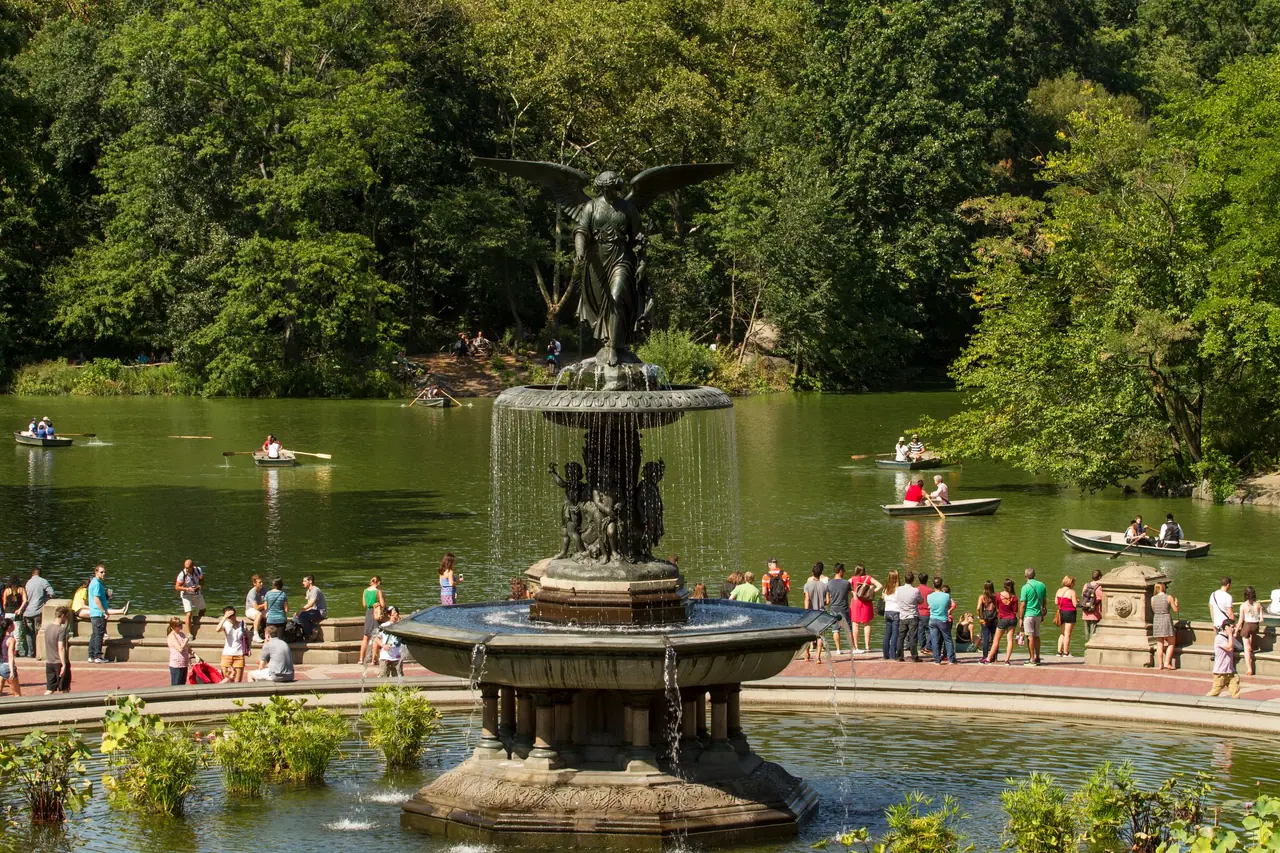
Planning a day around the heat
A summer day in Manhattan is easier in three parts. Start early, before ten, and put the outdoor sights first: a walk across a bridge, a stretch of the High Line, a loop of Central Park. Spend the middle hours indoors, in a museum, a library or a long lunch. Come out again in the late afternoon, when the shadows lengthen and the sidewalks lose their glare. This rhythm suits hot weather and also matches how the city itself moves in July.
Two indoor anchors sit close to the middle of the island: the Metropolitan Museum of Art on Fifth Avenue at 82nd Street and the American Museum of Natural History on Central Park West at 79th Street. Both are large enough to absorb three hours without effort. Check opening days and any timed entry before you go, since both change seasonally. Smaller museums and branch libraries fill the gaps. Carry a refillable bottle and drink more than thirst suggests.
Lincoln Square in summer
Lincoln Square is the Upper West Side neighborhood built around Lincoln Center, the performing arts complex on the west side of the island. In summer the plaza and fountain work as an open-air living room: people sit on the steps in the evening, and the complex runs outdoor performances and screenings. The programming is seasonal and announced each year, so check the current calendar rather than assuming a date. Walking through the square costs nothing.
Summer is a practical time to stay in this part of the Upper West Side because two parks sit within walking distance: Central Park to the east and Riverside Park along the Hudson to the west. Both are cooler than the streets in the evening. The neighborhood is well connected by subway, though weekend service changes are common across the system, so check the transit authority's advisories before relying on a particular line. Summer is a busy hotel season, so check the total price with taxes and fees before booking.
- Lincoln Center's plaza hosts free outdoor performances and screenings in summer; check the current schedule.
- The fountain plaza is a place to sit in the evening; shade at midday is limited.
- Central Park's southwest corner is a short walk east; Riverside Park and the Hudson are west.
- Weekend subway service changes are common in summer; check the transit authority before you travel.
Storms, shade and water
Hot, humid afternoons in Manhattan often end with a thunderstorm. They usually arrive quickly, drop heavy rain for a short time and clear. A light rain layer and a dry bag take little space and make the difference between waiting out a shower and getting soaked. When thunder starts, step out of parks and off the waterfront and into a museum, a shop or a station. Summer storm timing is unpredictable, so check the radar in the morning and again before an evening event.
Water is the other way to manage heat. The Staten Island Ferry is free, leaves from Whitehall Terminal at the southern tip of Manhattan and passes the Statue of Liberty; the crossing takes about twenty-five minutes. The breeze on deck is part of the appeal. Hudson River Park and Riverside Park run along the west edge of the island and are cooler in the late afternoon. Central Park's shaded paths offer the same relief inland. Fountains are for looking, not swimming.
Summer evenings in Manhattan
Summer evenings are the reward for the heat. Daylight lasts long into the evening in June and July, and the light turns gold on the west-facing streets before sunset. Manhattanhenge, when the setting sun aligns with the cross streets, happens a few days a year, usually in late May and mid-July. The July alignment draws the largest crowds. The clearest view is from a wide cross street with an open line of sight to New Jersey; arrive early, since the sidewalk fills and traffic keeps moving.
Observation decks are busiest at sunset, when the light softens. One World Observatory, SUMMIT One Vanderbilt, Edge, Top of the Rock and the Empire State Building all sell timed tickets; book ahead and check the day's opening hours, since summer schedules differ from winter. For something quieter, walk a bridge at dusk or take the ferry after dark. Evening park programming runs through August. Whatever you choose, keep the pace slow: the heat of the day is still in the pavement.
Manhattan in Summer: Heat and Free Events: questions
How hot does Manhattan get in summer?
Summers in Manhattan are hot and humid, and July and August are usually the steamiest weeks. Streets between tall buildings hold the heat, while parks with mature trees stay cooler. The city issues heat advisories when temperature and humidity combine badly. Check the forecast each morning, carry water and move the longest walks to early morning or after sunset.
Which free outdoor events happen in Manhattan in summer?
Parks and public plazas across Manhattan run free concerts, film screenings and dance performances from June through August, mostly in the evening. Central Park, Bryant Park, Riverside Park, Hudson River Park and the High Line all host summer programming. Schedules are published in late spring and change each year, so check the city parks department and each park's calendar before an evening out.
What should you pack for Manhattan in summer?
Light, loose clothing, a refillable water bottle, a hat, sunglasses and comfortable walking shoes cover most days. Add a light rain layer for afternoon storms and a thin sweater for air-conditioned museums and for evenings after sunset. Subway platforms are hot, so dress in layers you can remove. Check the forecast each morning, since a hot day can end in heavy rain.
Does Manhattanhenge fall in summer?
Partly. The sunset alignment with Manhattan's cross streets happens a few days a year, usually in late May and again in mid-July, so only the July dates fall in summer. The effect shows clearly from a wide cross street with an open view west toward New Jersey. Arrive early; the sidewalks fill and the light lasts only a few minutes around sunset.
Is Lincoln Square a good base for Manhattan in summer?
It works well. Lincoln Square sits on the Upper West Side, within walking distance of both Central Park and Riverside Park, and the Lincoln Center plaza is a free place to sit in the evening. Subway connections reach the rest of the island, though weekend service changes are common. Summer is a busy hotel season, so check the total price with taxes and fees.
How do you plan a day around the heat in Manhattan in summer?
Split the day. Do outdoor walking before ten, when streets are shaded and cooler, and spend midday indoors at a museum, library or long lunch. Come out again after four, when the light softens, and keep the evening for parks, waterfront walks or outdoor events. Carry water and treat a city heat advisory as a signal to stay inside.
Do thunderstorms interrupt summer days in Manhattan?
Often enough to plan for. Hot, humid afternoons can end in a fast, heavy storm that clears within an hour. Keep a light rain layer in your bag, and when thunder starts, move off the waterfront and out of parks. Outdoor events are usually cancelled when storms are forecast. Check the radar in the morning and again before an evening event.
Where can you cool down in Manhattan in summer?
Museums are the most reliable option: the Metropolitan Museum of Art and the American Museum of Natural History are large and cool, though both change opening days seasonally, so check ahead. Libraries, cinemas and shops also work. Outdoors, shaded paths in Central Park and the waterfront parks are cooler than open plazas. The Staten Island Ferry is free and breezy. Carry water throughout.