- Borough
- One of the five New York City boroughs
- Subway
- Runs 24 hours a day
- Museum Mile
- Fifth Avenue, roughly 82nd to 105th Streets
- Ferry
- Staten Island Ferry, free, about 25 minutes
Plan the day indoors
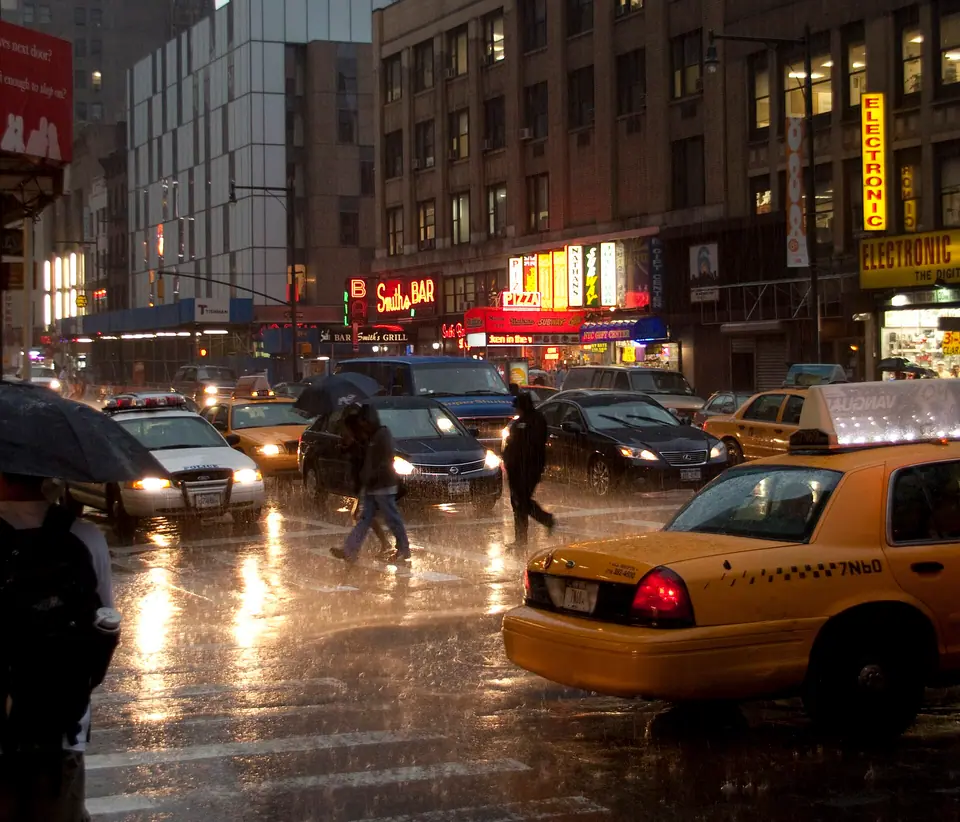
Rain in Manhattan rarely ends a day out. It changes the order of it. The grid makes shelter easy to find: subway stairs on nearly every corner, lobbies, arcades and stations that link one stop to the next. Build the day in short hops rather than long walks. Pick one neighborhood, choose two indoor anchors close together, and leave the walking for the gaps between showers. A wet afternoon needs less ambition than a dry one, not more. Write the plan down before you leave, with one indoor backup for each stop.
Timing matters more than distance. Museums tend to be quieter in the first hour after opening and again in the late afternoon, when school groups have gone and evening events have not started. A matinee or an early evening curtain gives a wet day a natural shape. Check opening days before you travel, since many museums close one day a week, and check whether timed entry is required. Book only what you can reach on foot or by a short subway ride.
Museums on and near Fifth Avenue
Fifth Avenue carries one of the longest runs of museums in the city. The Metropolitan Museum of Art stands at Fifth Avenue and 82nd Street, at the start of Museum Mile, which runs roughly from 82nd to 105th Streets. A single wet morning fits one wing comfortably. The American Museum of Natural History, on Central Park West at 79th Street, is the other great indoor anchor on the park, on the far side of the park from Fifth Avenue.
Both museums reward a plan. Pick two or three galleries rather than a whole floor, and check the day's opening hours before setting out, since hours change by season and by day. Entry is ticketed and often timed; check the museum's own site for current terms. Cloakrooms usually take wet coats and umbrellas, so a rainy visit is easier than a dry one: you carry less. Buy or reserve in advance if a specific slot matters to your day, and keep one flexible museum in reserve.
- The Metropolitan Museum of Art sits at Fifth Avenue and 82nd Street, the first stop on Museum Mile.
- The American Museum of Natural History is on Central Park West at 79th Street, close to the park.
- Museum Mile runs along Fifth Avenue from roughly 82nd to 105th Streets, so several collections sit within a short walk.
- The 9/11 Memorial museum in the Financial District is ticketed, and its two reflecting pools are free to visit outdoors.
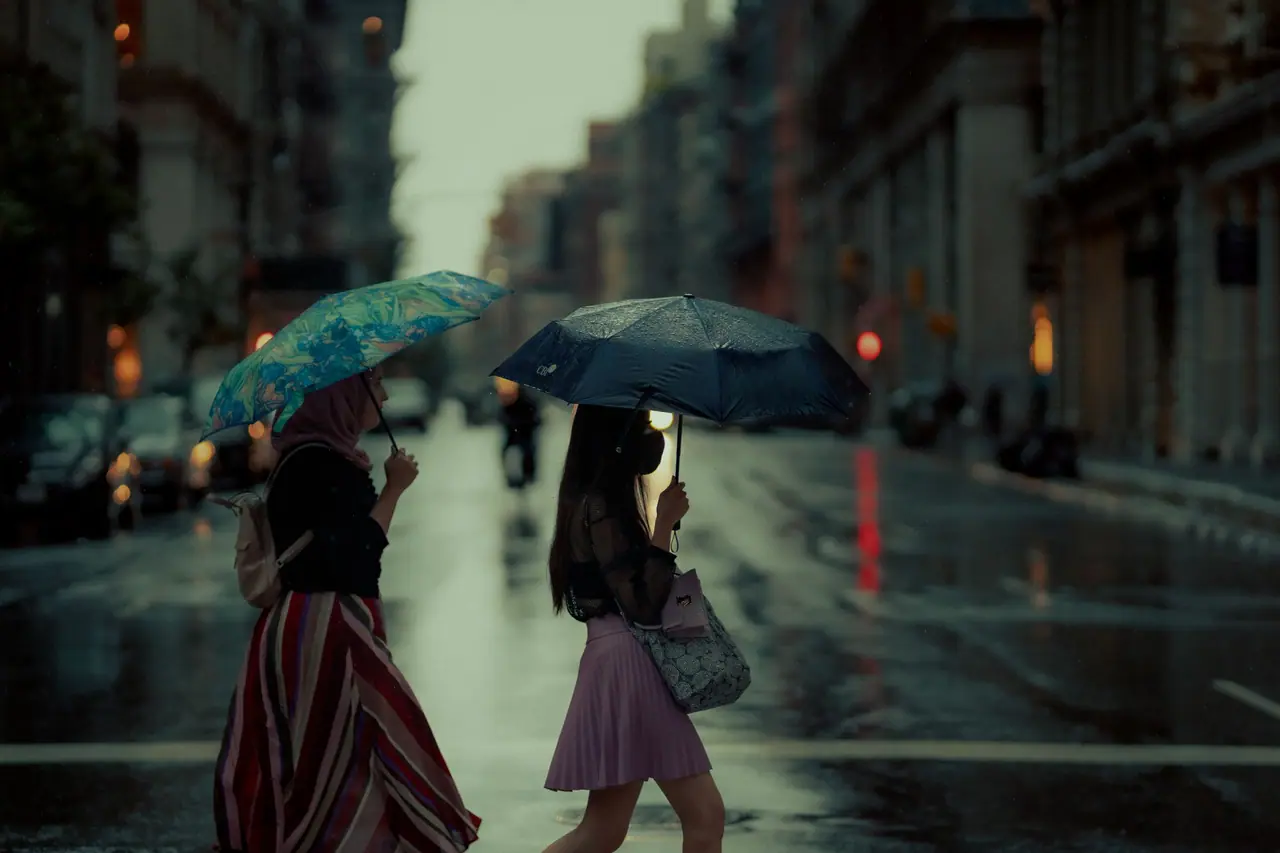
Rockefeller Center in the rain
Rockefeller Center works well in wet weather because much of it is a network of covered walkways and underground passages linking buildings, shops and the plaza. Top of the Rock, on floors 67 to 70, combines an indoor visit with an open-air deck; cloud and wind can close the deck, so check before booking and again on the day. SUMMIT One Vanderbilt, next to Grand Central Terminal, offers the same trade between shelter and sky. Both are ticketed, with timed entries.
The plaza itself is worth a short walk between showers, and the Christmas tree is lit around the end of November or early December, with the date set each year. Fifth Avenue window displays run from late November into early January, though December sidewalks are crowded in rain and snow. Grand Central Terminal, at 42nd Street and Park Avenue, is a good place to dry off, and its concourse links to the subway. Signs inside the complex point to the concourse, the plaza and the subway.
Covered markets and station halls
Market halls give a wet day a roof, a route and a reason to keep walking. Chelsea Market occupies a former industrial building in Chelsea, close to the High Line's southern end at Gansevoort Street, and works as a covered loop on a wet morning. The High Line itself, an elevated park from Gansevoort Street to West 34th Street, is free but exposed, so save it for a break in the weather. The point is to keep moving without getting soaked between stops.
Station halls are the city's free shelters, and three of them sit close to the main sights. Grand Central Terminal, at 42nd Street and Park Avenue, has a concourse worth seeing on its own. Penn Station, on 34th Street between Seventh and Eighth Avenues, and the Port Authority Bus Terminal at 42nd Street and Eighth Avenue, are plainer but useful in a downpour. All three connect to the subway without stepping into the rain. Signage inside each station points to street exits, which matters when rain is driving sideways.
- Grand Central Terminal at 42nd Street and Park Avenue has a grand concourse and direct subway connections.
- Penn Station, on 34th Street between Seventh and Eighth Avenues, is busy but fully covered and links to the subway.
- The Port Authority Bus Terminal at 42nd Street and Eighth Avenue shelters bus travelers and connects underground to the subway.
- Chelsea Market in Chelsea is a covered market hall near the High Line's southern end at Gansevoort Street.
- The New York Public Library's main building at Fifth Avenue and 42nd Street offers reading rooms and exhibitions indoors.
Free indoor options
Not every wet-hour plan needs a ticket. The Staten Island Ferry is free, leaves from Whitehall Terminal at the southern tip of Manhattan, and takes about 25 minutes to cross, passing the Statue of Liberty on the way. The boat has indoor seating, so a round trip fills an hour or more without a booking. Ferries to the Statue of Liberty and Ellis Island are ticketed and leave from Battery Park. In strong wind or fog, check with the operator before setting out.
The New York Public Library's main building at Fifth Avenue and 42nd Street is a public interior with reading rooms and exhibitions, and it sits near Grand Central Terminal. The 9/11 Memorial's two reflecting pools are free to visit, though they are outdoors; the museum below is ticketed. Observation decks are indoor attractions with outdoor views, so a low cloud base can cancel the point of going. Check the deck's weather policy before booking.
Getting around in the wet
The subway runs 24 hours a day, which makes it the wet-day backbone of any plan. You pay by tapping a contactless card or phone at the turnstile; the MetroCard is being phased out, so tap to pay where you can. A weekly cap applies after a set number of rides in seven days, and the tap system tracks it automatically. Check the transit authority's site for service changes before a long ride.
Above ground, traffic slows in rain, and vehicles entering Manhattan below 60th Street pay a congestion toll, in force since January 2025. That makes the subway faster for most cross-town hops. Wear shoes that handle puddles, carry a small umbrella, and keep a dry layer in a bag. If you are coming from an airport, allow extra time: JFK and Newark are typically 45 to 75 minutes from Midtown depending on traffic and connections. A charged phone helps when you change plans mid-block.
Manhattan on a Rainy Day: questions
Which museums suit a rainy day in Manhattan?
The Metropolitan Museum of Art on Fifth Avenue and the American Museum of Natural History on Central Park West are the two largest indoor anchors, and both sit beside Central Park. Museum Mile adds several collections along Fifth Avenue. Smaller museums fill the gaps on a wet afternoon. Check opening days and timed entry before you go, since hours change by season.
Is Rockefeller Center a good choice on a rainy day in Manhattan?
Yes, for a short visit. Covered walkways and underground passages link much of the complex, so you can move between the plaza and the buildings without staying in the rain. Top of the Rock and SUMMIT One Vanderbilt are indoor attractions with outdoor decks, and cloud can close the decks. Check conditions on the day.
Are observation decks worth it on a rainy day in Manhattan?
Sometimes, but the view is the point and low cloud hides it. Decks at the Empire State Building, Top of the Rock, Edge and One World Observatory sell timed entries, and operators can close outdoor sections in wind or storms. Check the operator's notice before booking, and keep an indoor backup such as a museum.
What free indoor options exist for a rainy day in Manhattan?
The Staten Island Ferry is free, leaves from Whitehall Terminal and crosses in about 25 minutes with indoor seating. Grand Central Terminal, Penn Station and the Port Authority Bus Terminal are free to walk through and connect to the subway. The New York Public Library's main building at Fifth Avenue and 42nd Street is a public interior, and Central Park is free but exposed.
How should you get around Manhattan on a rainy day?
Use the subway, which runs 24 hours a day. Tap a contactless card or phone at the turnstile, since the MetroCard is being phased out, and a weekly cap applies after a set number of rides in seven days. Above ground, rain slows traffic, and vehicles entering below 60th Street pay a congestion toll, so allow extra time either way.
Do covered markets work for a rainy day in Manhattan?
They do, as a morning or an afternoon rather than a whole day. Chelsea Market is a covered hall in Chelsea near the High Line's southern end, and station halls such as Grand Central Terminal serve the same purpose. Markets are busiest at meal times, so go early or late and keep the rest of the day indoors nearby.
What should you pack for a rainy day in Manhattan?
A light waterproof jacket, shoes with grip and a spare pair of socks cover most wet days. An umbrella helps on open avenues but turns inside out on windy corners. Museums usually have cloakrooms for wet coats. A small bag keeps a dry layer, a charged phone and a contactless card ready for the subway.
Are Broadway shows a good rainy day plan in Manhattan?
They are, since the theaters cluster around Times Square in the Theater District and most of the walk from the subway is short. Evening curtains are typically 7 or 8 pm, and matinees give a wet afternoon a shape. Check the show's own schedule and ticket terms, and book ahead for popular performances.