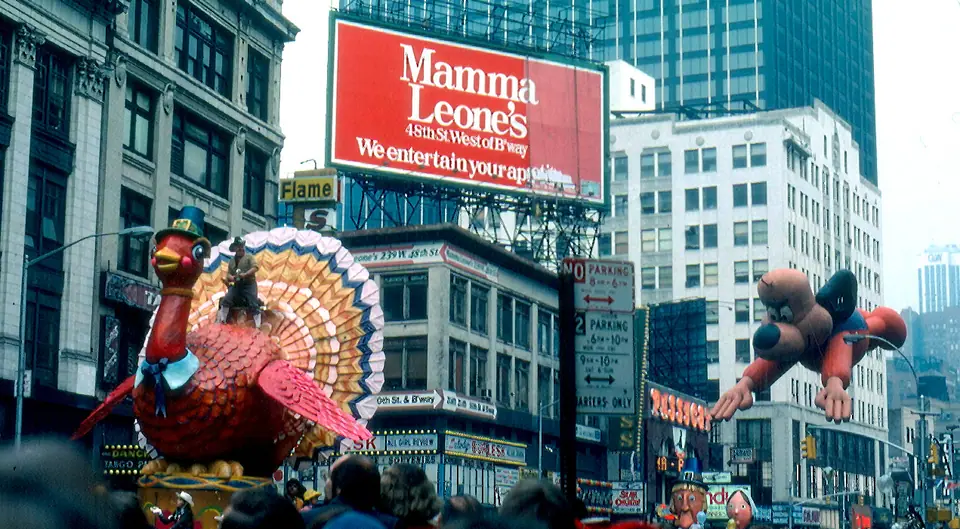
- Parade day
- Fourth Thursday of November
- Route
- Central Park West to Midtown
- Balloon inflation
- Day before, Upper West Side
- Local base
- Lincoln Square, near the turn
The route, west to Midtown
The parade forms on the Upper West Side on the morning of the fourth Thursday of November and moves south along Central Park West. It passes Lincoln Square and Columbus Circle, turns east for a short stretch at the park's southwest corner, then runs downtown on Sixth Avenue to the Thirties. The official schedule sets the start time and the exact closing streets, and both are confirmed closer to the day by the parade organizer.
Street closures follow the route and begin well before the first float, so cross-town traffic on the Upper West Side and in Midtown is restricted through the morning. Subway service runs on a holiday schedule, and some entrances near the route close. If you are staying in Lincoln Square or anywhere along Central Park West, plan to walk rather than ride for the last stretch, and allow more time than a normal morning requires.
Lincoln Square sits just north of the route's turn at Columbus Circle, which makes it a practical base. From there you can walk to Central Park West in a few minutes, and retreat indoors when the cold wins. The neighborhood is also within reach of the Sixth Avenue stretch, which gives you a second option if Central Park West is full.
Balloon inflation the day before
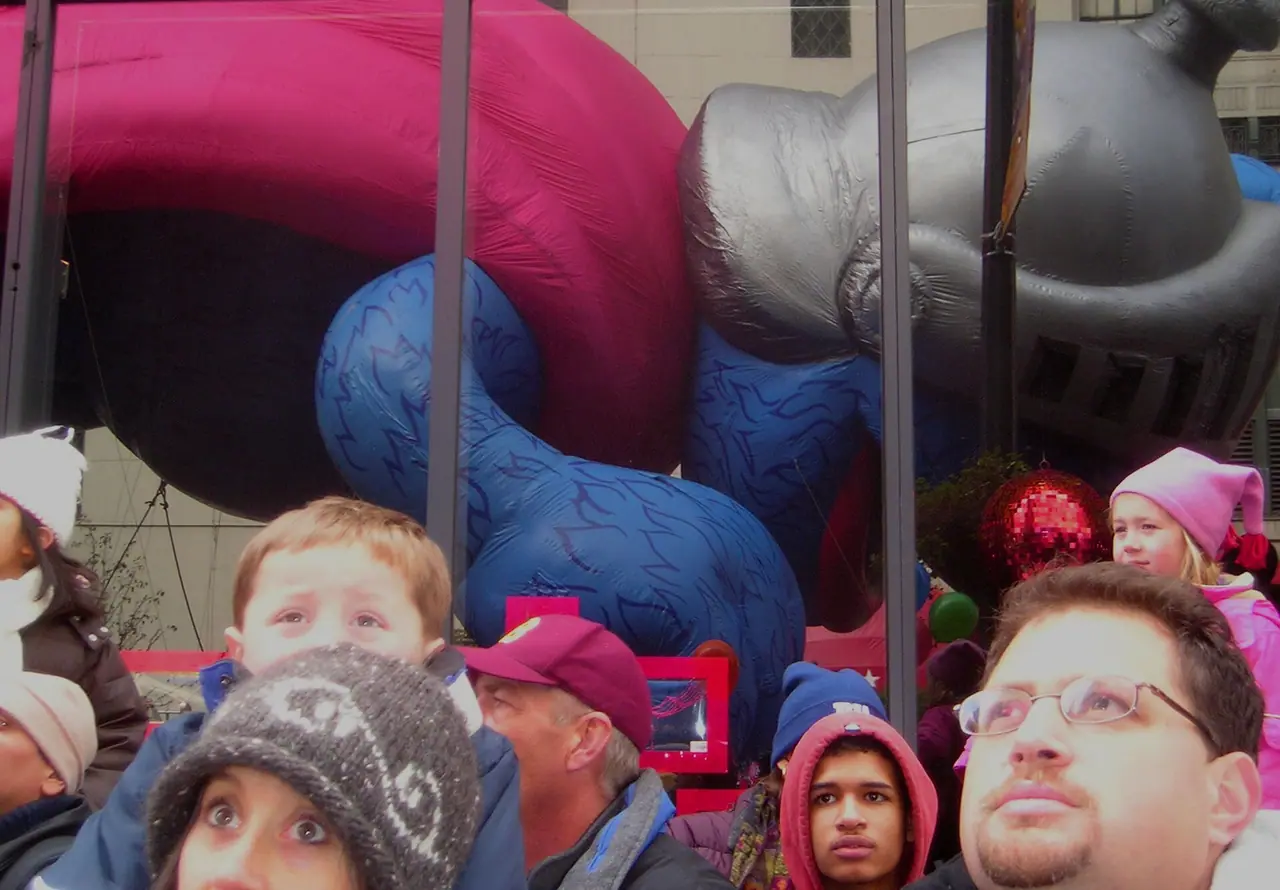
The large character balloons are filled on the street beside the American Museum of Natural History on the Wednesday before Thanksgiving, usually from the afternoon into the evening. The work happens in public view, and the crowds that gather are part of the event. Access is free. Streets around the museum close to traffic, and the organizer sets the viewing areas and the hours, which shift slightly each year, so check the current arrangements before you set out.
Go early in the inflation window rather than at the end, when the narrowest sections become hard to move through. The blocks between the park and Columbus Avenue are the busiest; the northern and southern edges of the setup are usually calmer. Families with children often find the afternoon easier than the evening. Wear layers, expect to stand, and keep hold of anyone small: the crowd moves in slow surges rather than as a single stream.
Where to stand
The route offers very different experiences. Central Park West is the closest stretch to Lincoln Square hotels and gives long views with the park behind the parade. Columbus Circle is tight and loud. Sixth Avenue is wider, with a straight sightline down the avenue, and the blocks north of the terminus are usually less packed than the final corner. Whatever you choose, arrive early; the front row along the barriers goes first, and latecomers see the parade over shoulders.
Standing room only is the rule on the street, and there are no tickets for the route. Some buildings along Central Park West and Sixth Avenue open their windows to residents and guests, but those are private arrangements. Bring something to sit on only if you are early enough to use it; once the crowd fills in, folding chairs become a nuisance. The parade passes each point in a matter of minutes, so a spot with a clear view matters more than a spot at the very front.
- Central Park West between the upper Seventies and Lincoln Square: long sightlines and easier access from the park side.
- Columbus Circle: crowded and noisy, but close to the turn where the route changes direction.
- Sixth Avenue in the Fifties: wider sidewalks and a straight view south toward the terminus.
- The blocks just north of the finish: busy, though generally less dense than the final corner.
- Side streets off Sixth Avenue: a partial view that proves useful when the avenue is full.
Getting there and around
The subway is the sensible way in. Service runs all day, but holiday timetables and reroutings apply, and stations closest to the route may be closed or exit-only during the morning. Tap a contactless card or phone at the turnstiles and check the transit agency's holiday notice before traveling; it lists planned closures and diversions. Buses near the route are diverted or suspended for part of the day, and pedestrian crossings are managed at fixed points.
If you are driving in from outside Manhattan, note that congestion pricing applies to vehicles entering the zone below 60th Street, and the parade morning adds closures on top. Parking near the route is effectively unavailable. Taxis and ride-hail cars can drop you several blocks away but rarely closer. For arrivals from the airports, allow extra time; the roads are slow on the holiday morning and again in the early afternoon.
Planning the long weekend
Thanksgiving turns into a four-day break for many visitors, and the city fills accordingly. Thursday belongs to the parade and to family meals. Friday and the weekend suit museum-going: the Metropolitan Museum of Art on Fifth Avenue and the American Museum of Natural History on Central Park West both sit close to the route, and both are busy over the holiday. Book timed entries in advance and treat the afternoon as the calmer half of the day.
Broadway theaters run through the holiday, with evening curtains typically at seven or eight; check the show. The Rockefeller Center Christmas tree is lit around the end of November or early December, and Fifth Avenue's department-store window displays begin in late November, so a late Thanksgiving visit may catch the first days of both. A walk through Central Park after the parade, when the autumn color is usually past its peak, is quiet by mid-afternoon.
Book the long weekend early. Hotel rooms are in demand around the holiday, and the total bill adds state and city taxes plus a per-night occupancy charge, with some properties adding a facility fee; compare the total price with taxes and fees rather than the headline rate. Staying in Midtown or on the Upper West Side keeps the parade, the museums and the theaters within a short walk or a few subway stops.
- Thursday: the parade in the morning, a long walk in the afternoon, an early dinner.
- Friday: museums near the park, booked ahead for a morning entry.
- Saturday: a Broadway evening show, or a matinee if the evening is full.
- Sunday: a slow morning in the neighborhood before the journey home.
Weather, crowds and pacing
Late November in Manhattan is cold, with wind between the buildings that makes the avenue corners feel colder than the thermometer suggests. Snow is possible but not reliable. Dress in layers, bring gloves, and wear shoes you can stand in for hours. Crowds peak between mid-morning and midday along Central Park West and again at the end of the route as the last groups pass, so a modest amount of planning keeps the day manageable.
Coffee and food near the route sell out fast, and sit-down places in Lincoln Square fill early; eat before you go or carry something. Restrooms are scarce on the street, and the reliable options are museums, stations and hotel lobbies, which are not all open on the holiday. Charge your phone, agree on a meeting point if you split up, and keep an eye on the weather forecast, which can shift in the days before.
Thanksgiving and the Parade in Manhattan: questions
Where does the Thanksgiving parade in Manhattan start and finish?
The Thanksgiving parade in Manhattan forms on the Upper West Side and travels south along Central Park West, past Lincoln Square and Columbus Circle. It then turns east briefly and runs downtown on Sixth Avenue to the Thirties, finishing near Herald Square. The organizer publishes the exact start time and the streets that close, so check the current schedule before the day.
When is the balloon inflation for the Thanksgiving parade in Manhattan?
Balloons for the Thanksgiving parade in Manhattan are inflated on the Wednesday before, beside the American Museum of Natural History on the Upper West Side, usually from the afternoon into the evening. Watching is free and the work happens in public view. The organizer sets viewing areas and hours each year, so confirm the current arrangements before you go.
Do you need tickets to watch the Thanksgiving parade in Manhattan?
No. Watching the Thanksgiving parade in Manhattan from the street is free, and there are no tickets for the route. Front-row places along the barriers go to those who arrive earliest. Views from apartments and offices along Central Park West and Sixth Avenue are private arrangements, not public viewing areas, so plan on the sidewalk.
How early should you arrive for the Thanksgiving parade in Manhattan?
Arrive well before the published start. The Thanksgiving parade in Manhattan draws people to Central Park West from early morning, and the best-placed stretches fill first. If you want a spot near Lincoln Square or at Columbus Circle, allow extra time for closed streets and busy subway entrances, and check the organizer's start time for the year.
How do you reach the Thanksgiving parade route in Manhattan?
Take the subway. It runs all day, though holiday timetables and diversions apply, and stations nearest the route may be exit-only or closed during the morning. Tap a contactless card or phone at the turnstiles and read the transit agency's holiday notice, which lists planned closures. Buses near the Thanksgiving parade route in Manhattan are diverted or suspended.
Can you watch the Thanksgiving parade in Manhattan from Lincoln Square?
Yes. Lincoln Square sits just north of the route's turn at Columbus Circle, so Central Park West is a short walk west and the Sixth Avenue stretch is a short walk south. It makes a practical base: you can reach the parade on foot, return indoors to warm up, and still be close to the museums and Midtown.
What else is open in Manhattan over the Thanksgiving long weekend?
Museums lead the list. The Metropolitan Museum of Art and the American Museum of Natural History both stay busy over the holiday, so book timed entries ahead. Broadway theaters keep playing; check each show. The Rockefeller Center Christmas tree is lit around the end of November or early December, and Fifth Avenue window displays start in late November. Confirm holiday opening hours before setting out.
What is the weather like for the Thanksgiving parade in Manhattan?
Late November in Manhattan is cold, and wind between the buildings makes avenue corners feel colder. Snow falls some years but cannot be counted on. Spring and autumn are milder, but for the Thanksgiving parade in Manhattan plan on layers, gloves and shoes you can stand in, and check the forecast in the days before.