- Type
- Memorial plaza and museum
- Area
- Financial District, Lower Manhattan
- Pools
- Free to enter
- Museum
- Ticketed, timed entry
What the site commemorates
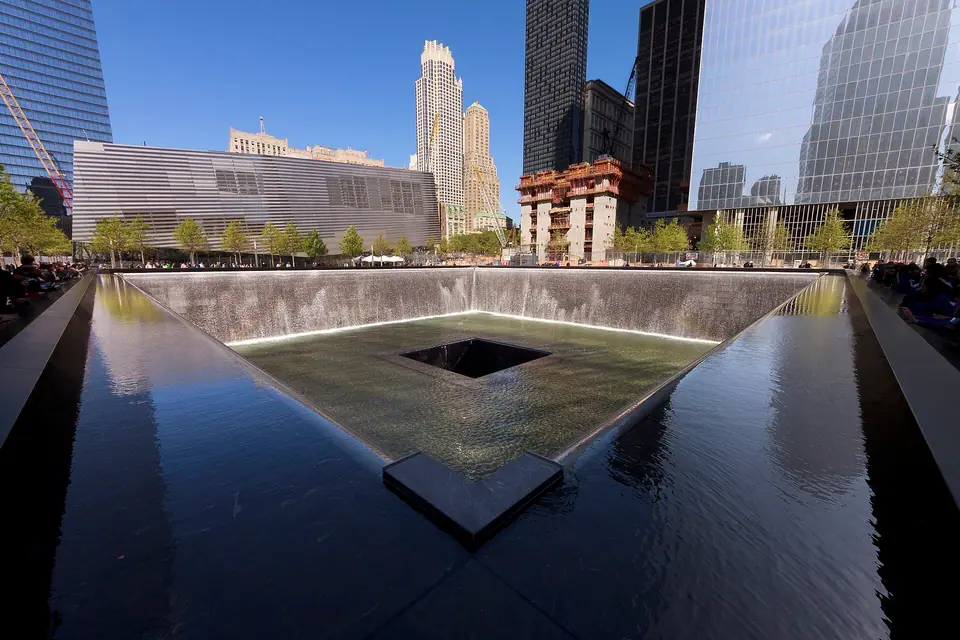
The memorial stands on the site of the World Trade Center in the Financial District, at the lower end of Manhattan. It commemorates the attacks of September 11, 2001, and the bombing of the trade center on February 26, 1993. The plaza opened to the public in 2011, on the tenth anniversary, and the museum followed in 2014 in the space beneath it. The site is a national memorial, and it remains both a place of remembrance and a working part of the neighborhood.
The layout was chosen in a public competition held after the attacks, and the winning design kept the two tower footprints open as pools, with a plaza of trees around them. The museum was built into the excavated space beside the surviving foundation walls. The result is unusual for a major monument: the memorial itself is at street level and free, while most of the historical material sits underground and requires a ticket.
The two reflecting pools
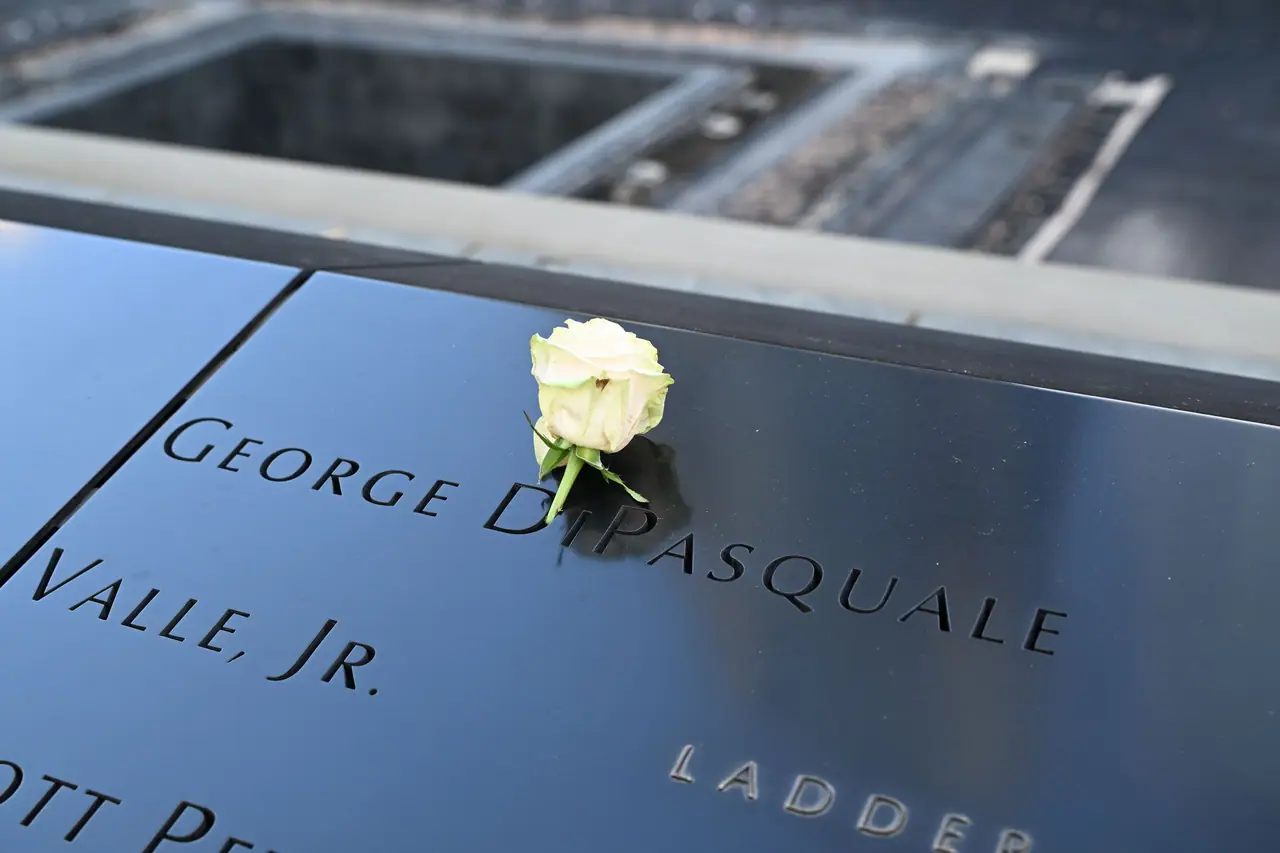
Each pool is a square basin set into the footprint of one tower, with water falling down all four inner walls into a dark central opening. The effect is sound as much as sight: the falling water drowns out much of the street noise. Around the rim, the names of those who died are cut into bronze panels, grouped not alphabetically but by relationships, so that colleagues, friends and family appear together.
The plaza is free and needs no ticket. There are no formal queues, but the panels draw steady crowds, and people stop to read, photograph and leave flowers, flags and notes. Quiet is expected here. A tradition has grown of placing a single white rose on a name on that person's birthday, so you may see one during a visit, set into the bronze among the letters.
The museum beneath the plaza
The museum entrance is on the plaza, and the route down passes the surviving staircase known as the Survivors' Stairs before reaching the main galleries. Inside, the collection includes twisted steel from the towers, the slurry wall that held back the Hudson River during the collapse, and the Last Column, covered in tributes from recovery workers. Personal objects, photographs and recorded testimony carry the story of the day and the months that followed.
The historical exhibition is detailed and often hard. It covers the hijackings, the collapse, the rescue and recovery effort and the aftermath, and it includes recordings of voicemails and emergency calls. Timed entry is usual, and security screening applies at the entrance. Check the museum's own website for current opening hours, admission, gallery closures and any free or reduced admission days before you travel.
Getting to the site
The memorial sits at the World Trade Center site, west of Church Street and south of Vesey Street, within easy walking distance of Wall Street, Battery Park and the Whitehall Terminal of the Staten Island Ferry. From Midtown, the subway is the simplest option: several stations are within a few blocks, and Fulton Center, the largest nearby interchange, is a short walk to the northeast.
PATH trains from New Jersey terminate beneath the World Trade Center, which puts you at the site without going outdoors. From JFK, the AirTrain connects to Jamaica and Howard Beach, where subway trains continue into Manhattan. From Newark, the AirTrain connects to the rail station and a train on to Penn Station. Both airport journeys typically take 45 to 75 minutes from Midtown, depending on traffic and connections.
- Subway: several stations stop within a few blocks, with Fulton Center the largest nearby interchange.
- PATH: trains from New Jersey arrive at the World Trade Center station beneath the site.
- Ferry: the free Staten Island Ferry leaves from Whitehall Terminal, a short walk south.
- On foot: the site is easy to reach from Wall Street, Battery Park and Tribeca.
Timing, crowds and practical tips
Early on a weekday morning is the calmest time on the plaza and the easiest time to find a museum slot. Weekends, school holidays and the weeks around the anniversary are busiest. September 11 itself is marked with a commemoration, and access to the plaza is restricted that morning, so check the arrangements well before traveling if the date matters to you.
The plaza is open to the sky and windy in cold months, so dress in layers and wear shoes suited to stone paving. Museum entry involves bag screening. Photography is normal at the pools, and quiet behavior is expected around the names. Inside the museum, check the current policy at the entrance before photographing galleries or films, since some areas restrict it.
Nearby sights and where to stay
The observatory at One World Trade Center occupies floors 100 to 102 on the same site, and St. Paul's Chapel, which served as a relief station after the attacks, stands across Church Street. Battery Park and the ferry terminal are a short walk south, the New York Stock Exchange and Wall Street are a few blocks away, and a walk east toward the Brooklyn Bridge takes you past City Hall Park.
The Financial District has the greatest concentration of places to stay, from large business hotels to smaller buildings on side streets, and the memorial is walkable from most of them. Tribeca, a short walk north, is quieter, with converted warehouses and its own restaurants. Battery Park City runs along the Hudson with views over the river. Check the total price with taxes and fees for your dates.
- One World Observatory: the observation floors at One World Trade Center, next door to the pools.
- St. Paul's Chapel: an eighteenth-century church across Church Street that served recovery workers.
- Battery Park: lawns, harbor views and the ferry terminal at the southern tip of the island.
- Brooklyn Bridge: a walkable crossing east of City Hall Park, reached on foot or by subway.
The 9/11 Memorial and Museum: questions
Is the 9/11 Memorial and Museum free to visit?
The two reflecting pools and the surrounding plaza are free and need no ticket. The museum beneath the plaza is ticketed, with timed entry on busy days. Check the museum's own website for current admission, opening hours and any free admission evenings before you plan your day.
Where is the 9/11 Memorial and Museum in Manhattan?
It stands on the World Trade Center site in the Financial District, at the southern end of Manhattan, west of Church Street and south of Vesey Street. Wall Street, Battery Park and the Whitehall Terminal for the Staten Island Ferry are all within a short walk, and Tribeca begins a few blocks north.
How do you get to the 9/11 Memorial and Museum by public transport?
Several subway stations are within a few blocks, with Fulton Center the largest nearby interchange. PATH trains from New Jersey stop beneath the World Trade Center. The free Staten Island Ferry arrives at Whitehall Terminal to the south. Check the current subway service before traveling, since weekend diversions are common.
How long does a visit to the 9/11 Memorial and Museum take?
The pools and plaza can take as little as half an hour if you are short of time, though most people linger at the names. The museum is much larger and deserves the better part of a morning or afternoon. Allow more time if you want to read the galleries in full.
What can you see inside the 9/11 Memorial and Museum?
The museum is built in the excavated space beside the towers' foundations. Exhibits include twisted steel, the slurry wall, the Last Column covered in tributes, personal objects, photographs and recorded testimony. The historical galleries trace the attacks, the rescue and recovery work and the aftermath. Some material is difficult, and seating is provided in the quieter galleries.
When is the best time to visit the 9/11 Memorial and Museum?
Weekday mornings are quietest on the plaza and easiest for museum entry. Weekends, school holidays and the anniversary period draw the largest crowds. The plaza is open to the weather, so spring and autumn are comfortable, and summer visits are best early before the heat builds. Check opening hours before you go.
Can you take photographs at the 9/11 Memorial and Museum?
Photography is common around the reflecting pools, where the names and the water draw most of the pictures. Visitors are asked to keep the mood calm and not to block the panels. Inside the museum, check the policy at the entrance before photographing galleries or films, because some areas restrict it.
Where should you stay near the 9/11 Memorial and Museum?
The Financial District has the largest choice of places to stay and is walkable to the site. Tribeca, a short walk north, is quieter and has converted warehouse buildings, while Battery Park City along the Hudson offers river views. Check the total price with taxes and fees for your dates.