- Location
- Central Park West at 79th Street
- Nearest areas
- Upper West Side, Lincoln Square
- Known for
- Dinosaurs, blue whale, planetarium
- Type
- Natural history museum
A museum beside Central Park
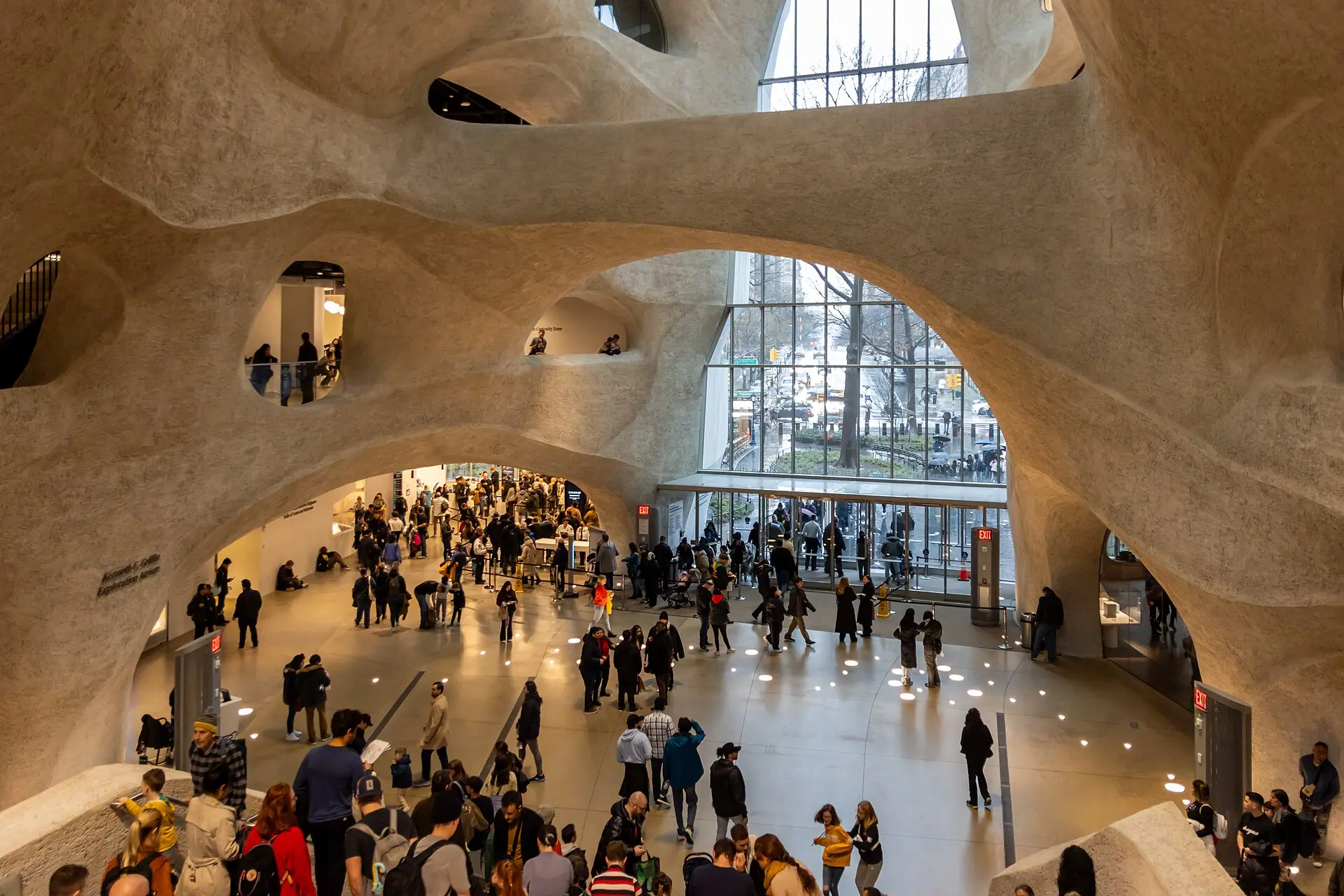
The American Museum of Natural History stands on Central Park West at 79th Street, on the west side of Central Park. It is one of the largest natural history museums in the world, and its halls cover astronomy, geology, paleontology, biology and human cultures. The museum was founded in 1869 and moved to this site in the 1870s. The building has grown outward in stages ever since, which is why the floor plan can feel like several museums joined together.
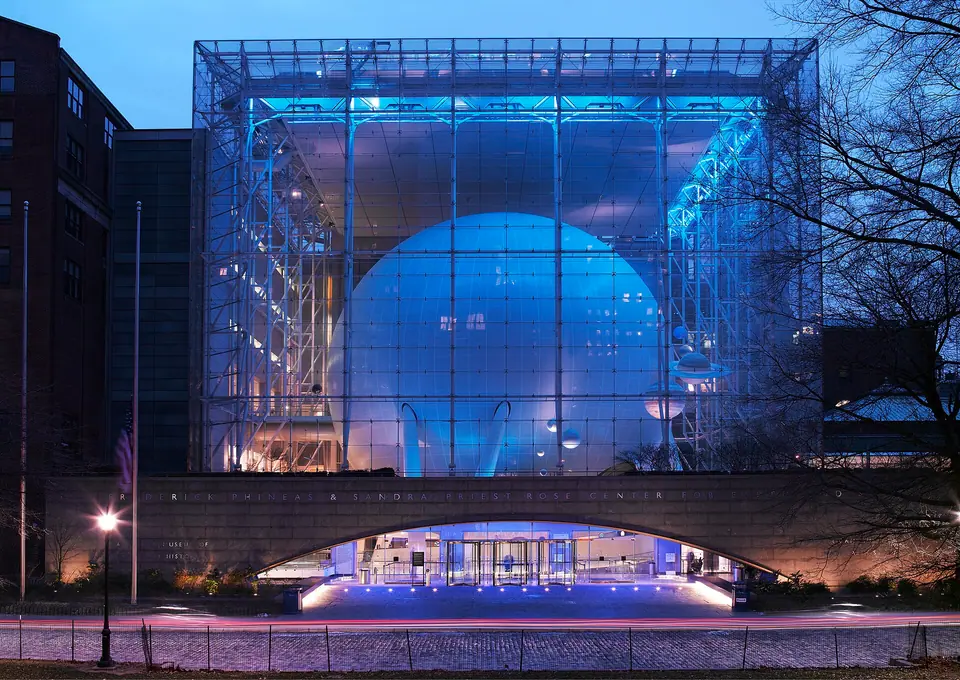
The long facade along Central Park West mixes Victorian Gothic brickwork with the glass cube and white sphere of the planetarium wing at the north end, added in 2000. Inside, the museum is organized by subject rather than by period: fossil halls on the upper floors, mammals and birds on the middle levels, ocean life and geology below. Signage is clear, but the building's joins and half-levels are confusing, so take a map at the entrance.
Dinosaurs, whales and other halls
Most visits begin with the dinosaurs, and rightly so. The fossil halls hold mounted skeletons of Tyrannosaurus, Apatosaurus, Stegosaurus and Triceratops, arranged in an evolutionary sequence that rewards slow reading of the labels. The upper halls are the ones people mean when they talk about a dinosaur museum: long galleries, high ceilings, and specimens collected over more than a century of fieldwork. Arrive early if you want those galleries before the school groups.
Lower down, the hall of ocean life is dark and blue-lit, dominated by a life-size blue whale model suspended from the ceiling above a dim hall of dioramas. Nearby galleries cover biodiversity, North American mammals and birds, and the mineral and meteorite collections, which are quieter and often missed. The cultural halls cover Africa, Asia, the Pacific and the Americas, with canoes, masks, textiles and totem poles. Together they make the museum far more than a dinosaur stop.
- The fossil halls, where the dinosaur skeletons are mounted in evolutionary order.
- The hall of ocean life, with the blue whale model hanging overhead.
- The mineral and meteorite galleries, quieter than the dinosaurs and often overlooked.
- The cultural halls, which cover Africa, Asia, the Pacific and the Americas.
Planetarium and space shows
At the north end of the museum, the planetarium sits inside a white sphere within a glass cube. The dome theater runs short programs on the night sky, the solar system and cosmology, projected onto a curved screen, with a live narrator at many showings. Planetarium tickets are separate from general admission or sold as a combination, and showtimes change through the year, so check the day's schedule before fixing your arrival time.
The space galleries around the theater deal with the scale of the universe, the life cycle of stars and the search for planets beyond the solar system, using models, meteorites and interactive displays. This is the section most likely to hold older children and adults who have already walked the dinosaur halls. Shows are short, which makes the planetarium easy to pair with a walk across the park afterwards. Late-afternoon slots are often the easiest to book.
Getting there
The museum stands on Central Park West between 77th and 81st Streets, with the main entrance on 79th Street facing the park. Subway stations on Central Park West and on Broadway are each a short walk from the doors, and buses run along Columbus Avenue and Central Park West. Check current subway and bus service before traveling, because weekend diversions and closures are common. Walking across the park from the East Side works well in fine weather.
From JFK or Newark, allow roughly 45 to 75 minutes to Midtown by train or road, depending on traffic and connections, then finish the trip by subway or taxi. LaGuardia is usually quicker by road. Drivers entering Manhattan below 60th Street pay the congestion toll; the museum sits north of that zone, but garage charges and crosstown traffic still apply. Check the museum's site for which entrance is open and for step-free routes from the street.
When to go and how long
Weekday mornings are the calmest hours in the dinosaur halls. Weekends, school holidays and rainy days are busiest, when everyone indoors has had the same idea. Spring and autumn are the pleasantest seasons for the walk through Central Park afterwards, while summer afternoons are hot and the museum becomes a refuge. December brings holiday crowds to the whole Upper West Side. Check the museum's opening days before traveling, since they can vary around public holidays and for special events.
A first visit covering the dinosaurs, the blue whale and one or two other galleries takes most of a morning or an afternoon. Add a planetarium show and a special exhibition and a full day is realistic. Repeat visitors often pick a single wing or floor per trip and leave the rest. Lockers and a coat check make it easier to travel light, and food service inside the museum is busiest at midday, so eat early or late.
Wear comfortable shoes, because a visit covers several floors and a lot of ground, and bring a layer since some galleries run cool. Photography without a flash is generally allowed in the permanent halls, but some exhibitions and loaned objects are restricted, so read the signs at each entrance. Large bags and tripods are best left behind. Phones should be silenced in the dome, where the show depends on darkness and quiet.
Nearby sights and where to stay
Central Park begins across the street, and the museum makes a natural start or end to a walk. The Great Lawn, Belvedere Castle and the reservoir running track are all in the park's middle section. The New-York Historical Society sits a few blocks south on Central Park West. Riverside Park and the Hudson River esplanade lie west along 79th Street, and Lincoln Square, with its performing arts campus, is a short walk south down Broadway.
Most visitors stay on the Upper West Side, where the blocks around Broadway, Amsterdam and Columbus Avenues hold the densest cluster of places to sleep and eat within walking distance of the museum. Midtown is a short subway ride away and puts the rest of the city closer. Lincoln Square suits concert and theater evenings. Book well ahead for spring and autumn weekends and for December, and check the total price with taxes and fees, since city hotel bills add taxes and sometimes a nightly charge.
- Central Park, directly across Central Park West, with the Great Lawn and the reservoir track.
- The New-York Historical Society, a few blocks south on Central Park West.
- Riverside Park and the Hudson River esplanade, west along 79th Street.
- Lincoln Square and its performing arts campus, a short walk south.
The American Museum of Natural History: questions
Where is the American Museum of Natural History?
It stands on Central Park West at 79th Street, on the west side of Central Park in Manhattan. The main entrance faces the park at 79th Street, and the building runs north to around 81st Street. Subway stations on Central Park West and on Broadway are a short walk away.
How long does a visit to the American Museum of Natural History take?
A first visit covering the dinosaur halls, the blue whale and one or two other galleries takes most of a morning or an afternoon. Add a planetarium show and a special exhibition and a full day is realistic. Repeat visitors often choose a single wing per trip.
Do you need a separate ticket for the planetarium at the American Museum of Natural History?
Yes. Planetarium shows are ticketed separately from general admission or sold as a combination, and popular times sell out. Book a timed show with your museum entry, and check the day's schedule, since showtimes change through the year.
When is the quietest time to visit the American Museum of Natural History?
Weekday mornings are calmest, especially outside school holidays. Weekends, rainy days and the December holiday period are busiest. Spring and autumn are the pleasantest seasons for combining a visit with a walk in Central Park, and summer afternoons send crowds indoors.
Can you take photographs inside the American Museum of Natural History?
Handheld photography without a flash is generally allowed in the permanent halls, though some exhibitions and loaned objects are restricted. Tripods and selfie sticks may be limited. Check the signs at each gallery entrance and follow instructions from museum staff.
What should you wear to the American Museum of Natural History?
Comfortable shoes, because the halls spread over several floors and a visit covers a lot of ground. Bring a layer, since some galleries run cool, and use the coat check in winter. A small bag is easier than a large one in crowded halls.
Is the American Museum of Natural History good for children?
Yes. The dinosaur halls, the blue whale and the interactive displays in the space and biodiversity galleries hold attention across a wide age range. Weekday mornings are calmer for young children. Plan a short route around one or two highlights rather than trying to cover the whole building.
How do you reach the American Museum of Natural History from JFK or Newark?
Take a train or road connection into Midtown, which typically takes 45 to 75 minutes depending on traffic and connections, then continue by subway or taxi. From LaGuardia the road trip is usually shorter. Check current subway service before traveling, since weekend work can affect routes.