- Start
- City Hall, Lower Manhattan
- Crosses
- East River to Brooklyn
- Opened
- 1883
- Cost
- Free, no ticket needed
What the bridge is
The Brooklyn Bridge carries pedestrians, cyclists and traffic across the East River between Lower Manhattan and Brooklyn. Construction began in the late 1860s and the bridge opened in 1883, after John A. Roebling's design was carried through by his son Washington and by Washington's wife Emily. The two granite towers, with their pointed arches, remain the most recognizable part of the structure, and the road deck hangs from cables strung between them.
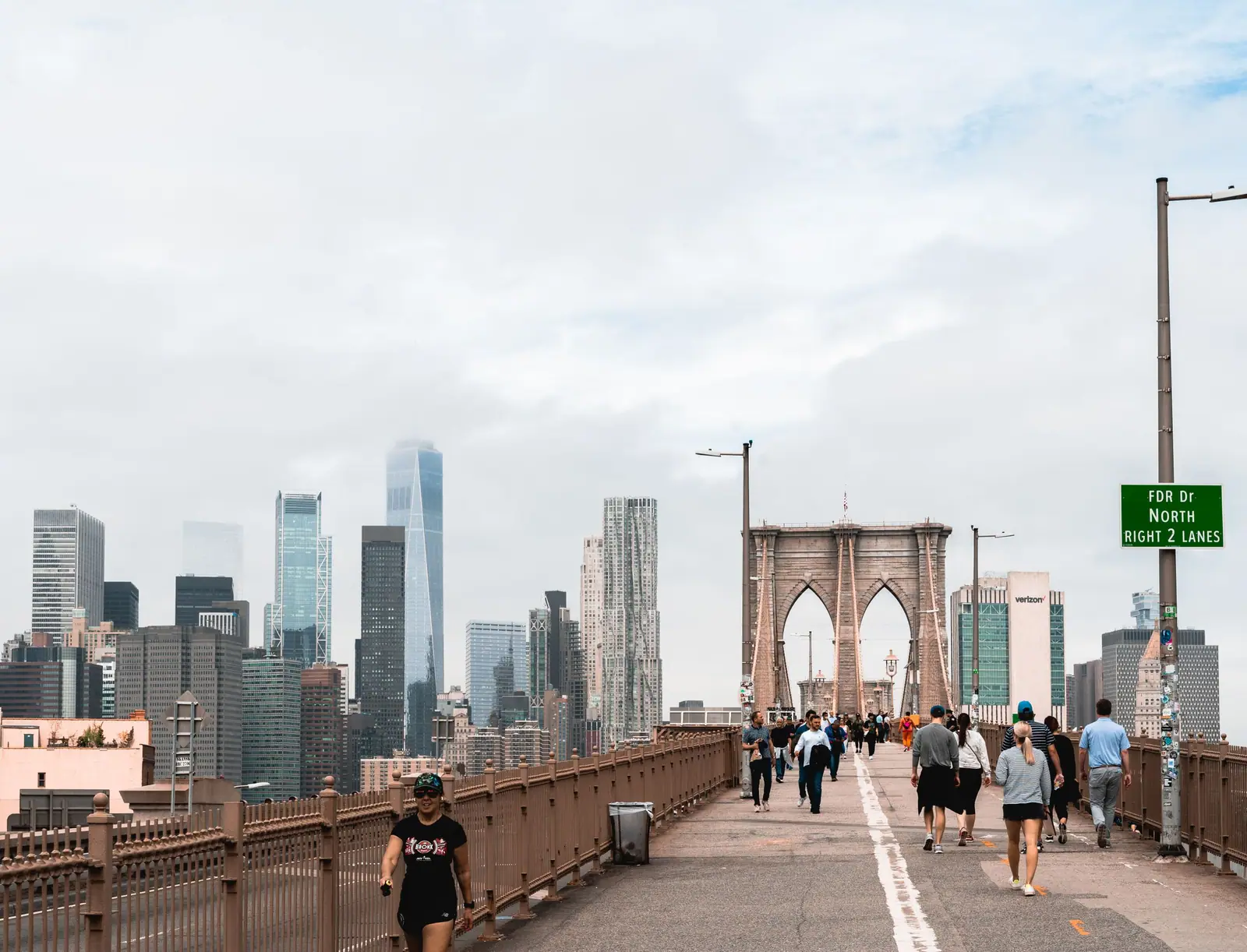
The walkway runs down the center of the bridge, above the traffic lanes, with the main cables rising overhead on either side. It is a public path, free to use, and it is the reason most visitors come. The Manhattan entrance sits in the Civic Center, a short walk from City Hall Park, so the crossing can be folded into a morning or afternoon in Lower Manhattan rather than treated as a separate trip. The walkway stays open around the clock, though daylight is when it makes sense for a first visit.
What to see from the walkway
The view changes with every few steps. Leaving Manhattan, you look back at the towers of the Financial District and the Civic Center rising behind you. Toward the middle of the span the harbor opens to the south, with the Statue of Liberty and the islands beyond it on a clear day. Underfoot, the deck plates and the steel work above show how the structure is put together. Look up at the diagonal stays that fan out from the towers.
At the Brooklyn end the walkway drops into a different city. The streets below are the old waterfront blocks of DUMBO, with the bridge framed in views up and down the East River. Brooklyn Bridge Park follows the shoreline for a good stretch, and it makes an obvious place to sit down before the return crossing. From there, the walk back to Manhattan feels like a different route, because the skyline is now in front of you.
- The two granite towers, with their pointed arches, stand on either side of the walkway.
- Looking back from mid-span gives the full Lower Manhattan skyline above the river.
- The Statue of Liberty and the harbor appear to the south on a clear day.
- Brooklyn Bridge Park, below the far end, follows the waterfront for a long stretch.
- Photographers gather at the towers for the frame of cables and stone.
Getting to the entrance
The Manhattan end of the walkway is in the Civic Center, beside City Hall Park. Subway stations at City Hall and Brooklyn Bridge-City Hall put you within a few minutes of the approach, and more than one line stops at each. Buses run along the streets south and west of the park. If you are staying in Tribeca or Chinatown, both are within a short walk, and the route on foot is straightforward. Allow a few extra minutes to find the ramp, since the signs are not always where you expect them.
Signs from City Hall Park point toward the pedestrian approach, but the entrance is easy to miss because it sits among road ramps and civic buildings. Follow the marked walkway rather than the roadway, and expect a short climb before the bridge proper begins. Allow extra time if you are arriving with luggage or a stroller, since the ramps and stairs around the approach can slow you down.
When to go and how long
Early morning is the calmest time on the walkway. From mid-morning onward the path fills, and weekend afternoons in summer and during the holiday season are the busiest of all. If photography matters, aim for the hour after sunrise, when the light comes up behind Brooklyn, or the hour before sunset, when the skyline in front of you catches the last of it. Weekday mornings in spring and autumn are the easiest of all.
Spring and autumn are the mildest seasons for the crossing, and autumn color in the parks on both sides usually peaks in early to mid November. Summer is hot and humid, with little shade on the walkway. Winter is cold and windy over the water, though the crowds are thinner from January into early March. Check the weather before you set out: wind and rain are felt far more on the bridge than in the streets.
Nearby sights in Lower Manhattan
The bridge sits within walking distance of most of Lower Manhattan's sights. City Hall Park is at the approach, with the Civic Center around it. West of the park, the 9/11 Memorial's reflecting pools are free to visit, while the museum is ticketed, and One World Trade Center's observatory is a short walk beyond. South of that, the Staten Island Ferry leaves from Whitehall Terminal, is free to ride, and passes the Statue of Liberty on a crossing of about 25 minutes.
Chinatown and Tribeca are both within a short walk, one east of the Civic Center and one west, and each gives a reason to extend the outing beyond the bridge. Chinatown's streets are busiest around lunch, while Tribeca is quieter and more spread out. The East River waterfront south of the bridge is pleasant in the morning. On the Brooklyn side, Brooklyn Bridge Park and the streets of DUMBO hold enough for another hour or two.
- City Hall Park, at the foot of the approach, is a good place to start or finish.
- The 9/11 Memorial pools are free to visit; the museum charges an entry fee.
- The Staten Island Ferry leaves from Whitehall Terminal, is free, and passes the Statue of Liberty.
- Chinatown, a short walk east of the Civic Center, is busiest around lunchtime.
- Tribeca, west of the Civic Center, has quiet streets and old warehouses.
Practical tips for the walk
Dress for wind and weather rather than for the photographs. The walkway is exposed from end to end, with no shelter once you are past the towers, so a light layer and a waterproof top earn their place even on a bright morning. Comfortable shoes matter more than they look, since the deck is hard and the walk back adds up. Carry water in summer, and expect the metal and stone to be hot underfoot at midday.
Crowds move slowly, and the walkway is shared with cyclists who have a marked lane, so keep to the pedestrian side and step aside rather than stopping in the middle. For photographs, the towers and the cable lines work best from the center of the path, but the walkway is narrow and people pass constantly. The Brooklyn end is the practical place to turn around, with parks, water and streets to explore before you cross back.
Walking the Brooklyn Bridge from City Hall: questions
How long does walking the Brooklyn Bridge take?
Allow an hour or more for walking the Brooklyn Bridge and returning at an easy pace, and longer on busy weekend afternoons when the walkway fills. The crossing itself takes less time than the crowds suggest, but stops for photographs and a look at Brooklyn Bridge Park add up. Set aside a half day if you plan to explore both ends.
Where does the Brooklyn Bridge walk start?
The Manhattan entrance to the Brooklyn Bridge walkway is in the Civic Center, a short walk from City Hall Park. Signs point toward the pedestrian approach, which sits among the road ramps and civic buildings. Subway stations at City Hall and Brooklyn Bridge-City Hall are within a few minutes, and Tribeca and Chinatown are both close on foot.
Is walking the Brooklyn Bridge free?
Walking the Brooklyn Bridge costs nothing. The walkway is a public path and there is no ticket or entry fee at either end. Allow for spending elsewhere: Brooklyn Bridge Park is free, while the 9/11 Memorial museum and the observatory at One World Trade Center are ticketed.
When is the best time to walk the Brooklyn Bridge?
Early morning is the calmest time for walking the Brooklyn Bridge, with the light behind Brooklyn at sunrise and the skyline ahead at sunset. Weekend afternoons in summer and the holiday season are busiest. Spring and autumn give the mildest weather, and autumn color in the parks usually peaks in early to mid November.
Can you walk the Brooklyn Bridge at night?
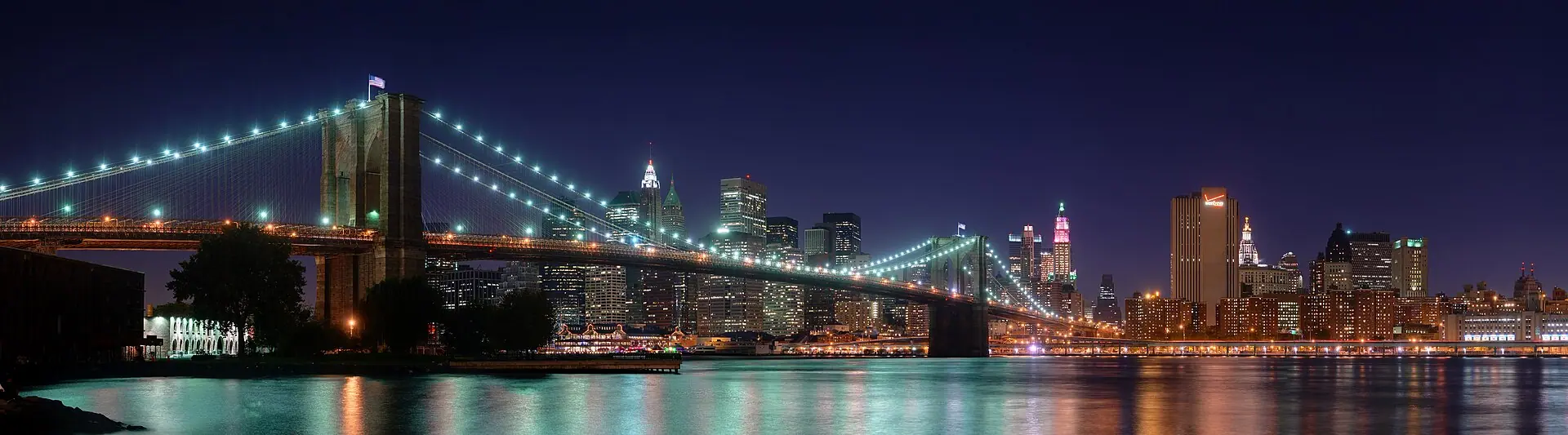
The walkway is generally open at all hours, and an evening crossing has its own appeal as the skyline lights come on. Conditions over the water are colder and windier than in the streets, so take a layer. Check official city sources before a late walk, since access and maintenance work can change.
How do you reach the Brooklyn Bridge walk by subway?
Subway stations at City Hall and Brooklyn Bridge-City Hall put you within a few minutes of the Manhattan approach, and several lines serve them. From Penn Station or Grand Central Terminal, ride downtown or walk. Check current service before you travel, since routes and weekend work change.
What should you wear for the Brooklyn Bridge walk?
Dress for wind and weather on the Brooklyn Bridge walk. The walkway is exposed from end to end, with no shelter past the towers, so a light layer and a waterproof top help even on a bright morning. Comfortable shoes matter, since the deck is hard, and water is worth carrying in summer.
Where should you stay near the start of Walking the Brooklyn Bridge?
For the Manhattan end of Walking the Brooklyn Bridge, the Financial District, the Civic Center, Tribeca and Chinatown are all within walking distance of the approach. DUMBO and Brooklyn Heights put you near the Brooklyn end. Check the total price with taxes and fees, since city and state taxes and a per-night occupancy charge are added.