- Opened
- First section opened in 2009
- Route
- Gansevoort Street to West 34th Street
- Entry
- Free, no ticket needed
- Nearest areas
- Chelsea and the West Village
What the High Line is
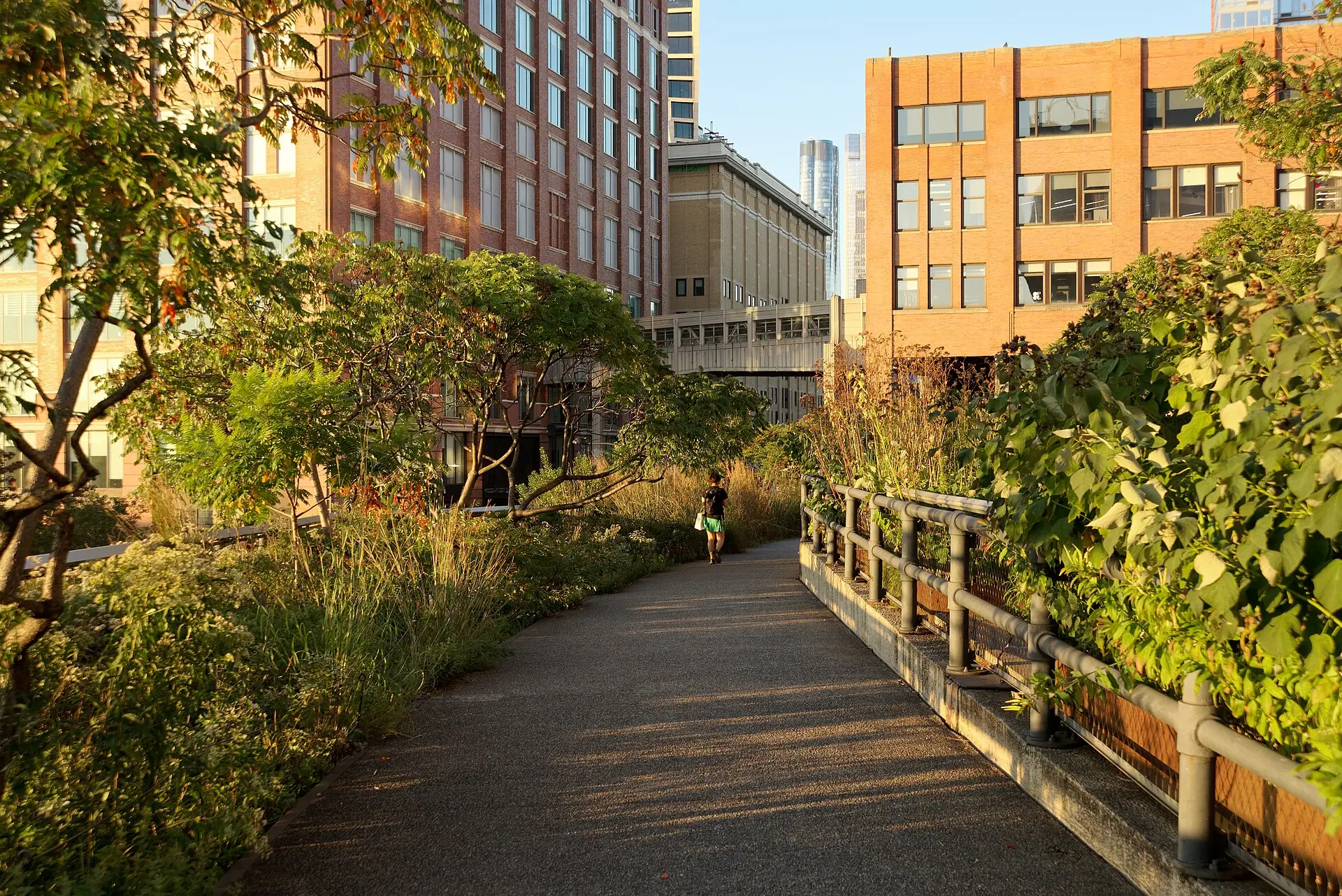
The High Line is a public park built on an elevated former freight rail line on the West Side of Manhattan. It begins at Gansevoort Street and runs north to West 34th Street at Hudson Yards, passing above Chelsea and close to the West Village. The park is free to enter and is planted with grasses, perennials, shrubs and small trees chosen to echo the wild growth that took over the tracks after freight service ended. Walkways, benches and overlooks sit among the planting.
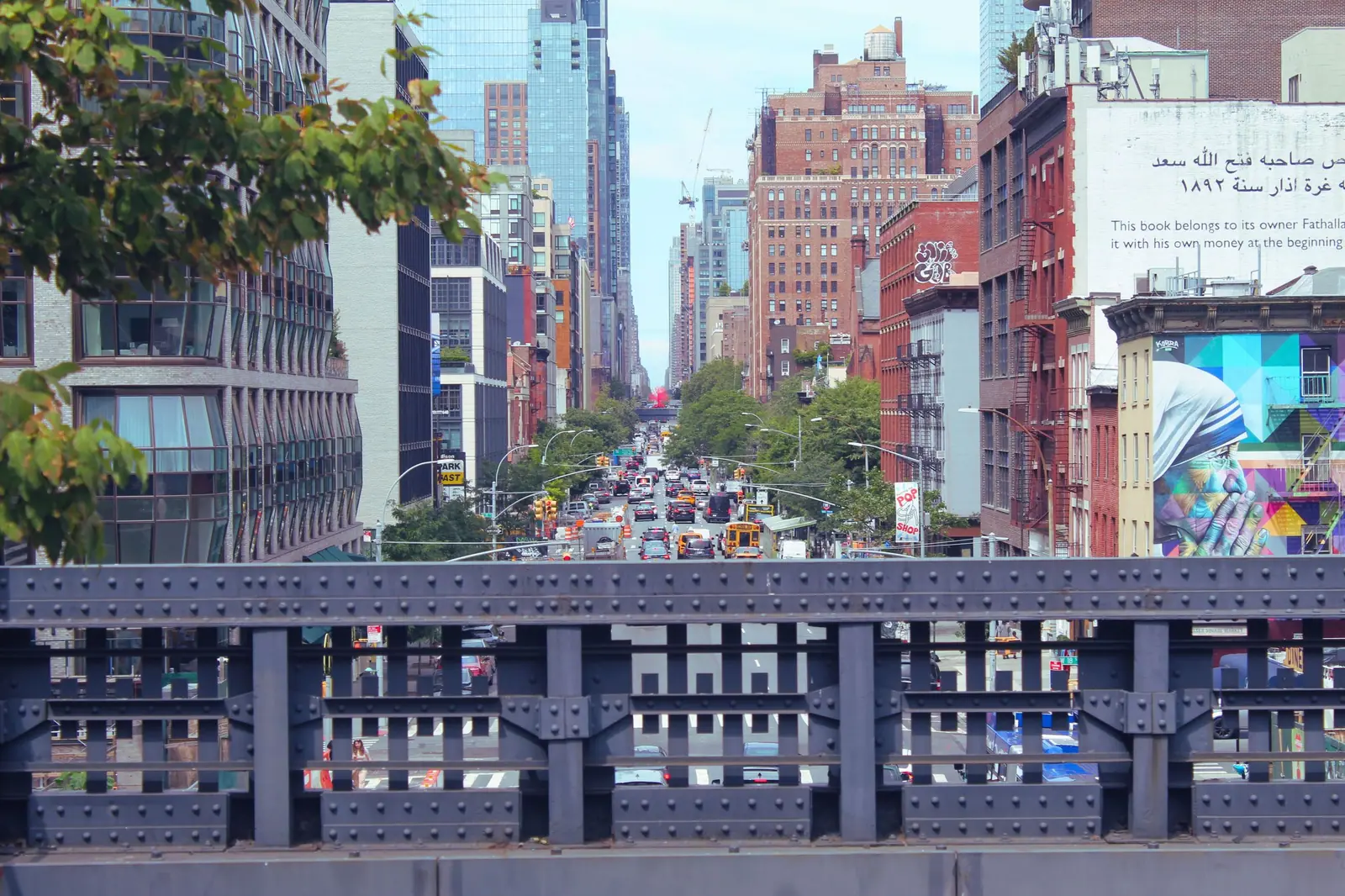
Because the park sits above the street, the city reads differently from it. You look into windows, over rooftops and across to the Hudson River, and the traffic below runs at a remove. The path is narrow in places and carries visitors in both directions, so it can feel crowded at busy times. Staircases and elevators connect the deck to the streets below. Pick up a map at an entrance, since the route has several access points and the exits are not always obvious.
A short history
The line was built in the 1930s as part of a West Side freight improvement, lifting trains off the streets and running them directly into warehouses and factories. It served the warehouses, markets and workshops packed along the waterfront, and it kept those deliveries off the crowded avenues below. Freight moved to trucks after the middle of the century, traffic on the line fell, and the last trains ran in 1980. The structure then stood derelict for years, with plants growing through the tracks, and parts of it were threatened with demolition.
Residents and supporters argued for reuse rather than removal, and the structure survived. The first section opened as a public park in 2009, and later sections carried the route north to West 34th Street. The design keeps the railway in view: lengths of track remain set into the planting, and the concrete deck and steel edges show throughout. The park now runs a program of public art, talks and seasonal planting, with volunteers and donors behind much of the work.
What to see along the way
The planting is the reason to walk slowly. Beds change through the year, from bulbs and early grasses in spring to the taller perennials and shrubs of high summer, then seed heads and russet stems in late autumn. Lengths of original rail are set into the beds, a reminder of what the deck was built for. Public art is placed along the route and changes over time, so what you pass depends on the season and the year. Benches, wide steps and overlooks give places to stop.
Views are the other draw. The route looks west over the Hudson River and the piers, east into the blocks of Chelsea, and north toward the towers rising around Hudson Yards. At a few points the deck opens toward the street below, so you can watch the avenue from above. The northern end finishes at West 34th Street beside Hudson Yards, which leaves you close to the far West Side and a walk from Penn Station.
- Lengths of original rail track remain set into the planting along the path.
- Public art installations change over time, so check what is on during your visit.
- The western edge gives open views across the Hudson River toward the opposite shore.
- Wide steps and benches at the overlooks are the usual places to pause.
Getting there
The park runs above the far West Side, roughly between the Meatpacking District and Hudson Yards. Entrances open at several points along the route, including Gansevoort Street, around West 23rd Street and at West 34th Street. Subway stations on the West Side sit within a short walk of these entrances, around 14th Street, 23rd Street and 34th Street. Buses run along the avenues nearby. Taxis and ride apps can drop you close, though street closures near the park change often.
Access from the street is by staircase or elevator, and not every entrance has both, so plan a step-free route before setting out if you need one. Entry is free and no ticket is required. Hours change with the season and with the light, and sections can close for maintenance or weather, so check the park's own website before a special trip. Rules on cycling, dogs and commercial photography are posted at the entrances, and the stairs at the southern entrances can back up on busy days.
When to go and how long
Spring and autumn are the mildest seasons in New York, and both suit the park. From April to June the planting is fresh and the days are comfortable, and from September to November the beds go to seed and the light softens. Autumn color in the city usually peaks in early to mid November. Summer is hot and humid, so early morning is easier. Winter is cold, with snow in some years, and the open deck catches the wind.
Walking the full route takes longer than the distance on a map suggests. There are stairs at the entrances, crowds in the narrow stretches, public art to look at and views that pull you to the edge of the deck. Allow generous time if you plan to add the Whitney Museum or Chelsea Market, and less if you mean to walk only the southern stretch between Gansevoort Street and West 23rd Street. The park is a place to stop, not only to pass through, and the seats fill quickly on fine weekends.
Nearby sights and where to stay
The southern entrance at Gansevoort Street sits beside the Whitney Museum of American Art and a short walk from the West Village and the Meatpacking District. Chelsea Market, on Ninth Avenue, is a few blocks east of the middle entrances. Hudson River Park and its piers run along the waterfront to the west, with paths and lawns. At the north end, Hudson Yards and the wider far West Side are on the doorstep, and Penn Station is a walk away.
Chelsea is the closest base for the park, with the West Village a short walk south and Hudson Yards at the northern end. Midtown is a reasonable alternative if you want the Theater District and Grand Central Terminal within reach, and the Financial District suits a longer stay built around lower Manhattan. Hotel bills in New York City add state and city taxes and a per-night occupancy charge, and some hotels add a facility or destination fee, so check the total price with taxes and fees.
- The Whitney Museum of American Art stands at the Gansevoort Street end of the park.
- Chelsea Market, on Ninth Avenue, is a short walk east of the middle entrances.
- Hudson River Park and the piers offer a waterfront walk west of the route.
- Penn Station, on 34th Street between Seventh and Eighth Avenues, is near the north end.
The High Line: An Elevated Park: questions
Is the High Line free to visit?
Yes. The High Line is a public park and entry is free. There is no ticket and no booking. Some events and talks may ask for a reservation, and the park's own website lists what is on. Opening hours change with the season, so check before you go, and note that sections can close for maintenance or bad weather.
Where does the High Line begin and end?
The park starts at Gansevoort Street, near the Whitney Museum and the Meatpacking District, and runs north to West 34th Street at Hudson Yards. Entrances open at several points between the two, including around West 23rd Street, so you can join or leave the route partway along.
How do you reach the High Line by subway?
Subway stations on the West Side sit within a short walk of several entrances, around 14th Street, 23rd Street and 34th Street. Tap a contactless card or phone at the turnstiles, since the MetroCard is being phased out. From Penn Station or Grand Central Terminal the park is a walk or a short ride away. Check current service before you travel.
When should you visit the High Line?
Spring and autumn are the mildest seasons, and both show the planting at its most interesting. Autumn color usually peaks in early to mid November. Summer is hot and humid, so go early, and winter is cold with snow in some years. Weekday mornings are calmer than weekend afternoons at any time of year.
How long should you allow for the High Line?
Allow more time than the distance on a map suggests. Stairs, crowds, public art and views all slow the walk, and the full route from Gansevoort Street to West 34th Street is best taken at an easy pace. Add time if you plan to stop at a museum or market nearby.
Is the High Line accessible for wheelchair users?
Several entrances have elevators as well as stairs, but not every one does, so check the park's own access map before setting out. The deck is level once you are up, with gentle slopes in places. Narrower stretches get crowded, which can slow a wheelchair or stroller. Park staff at the entrances can point out the step-free route.
Can you take photographs on the High Line?
Yes, photography for personal use is normal along the route, and the views west over the Hudson River and east into Chelsea are the usual subjects. Large equipment, tripods at busy times and commercial shoots may need permission, so ask park staff or check the park's rules. Be considerate of other visitors in the narrow sections.
What else is there to see near the High Line?
The Whitney Museum of American Art sits at the Gansevoort Street end, Chelsea Market is a few blocks east of the middle entrances, and Hudson River Park runs along the waterfront to the west. Hudson Yards and Penn Station are near the northern end, and the West Village is a short walk south.