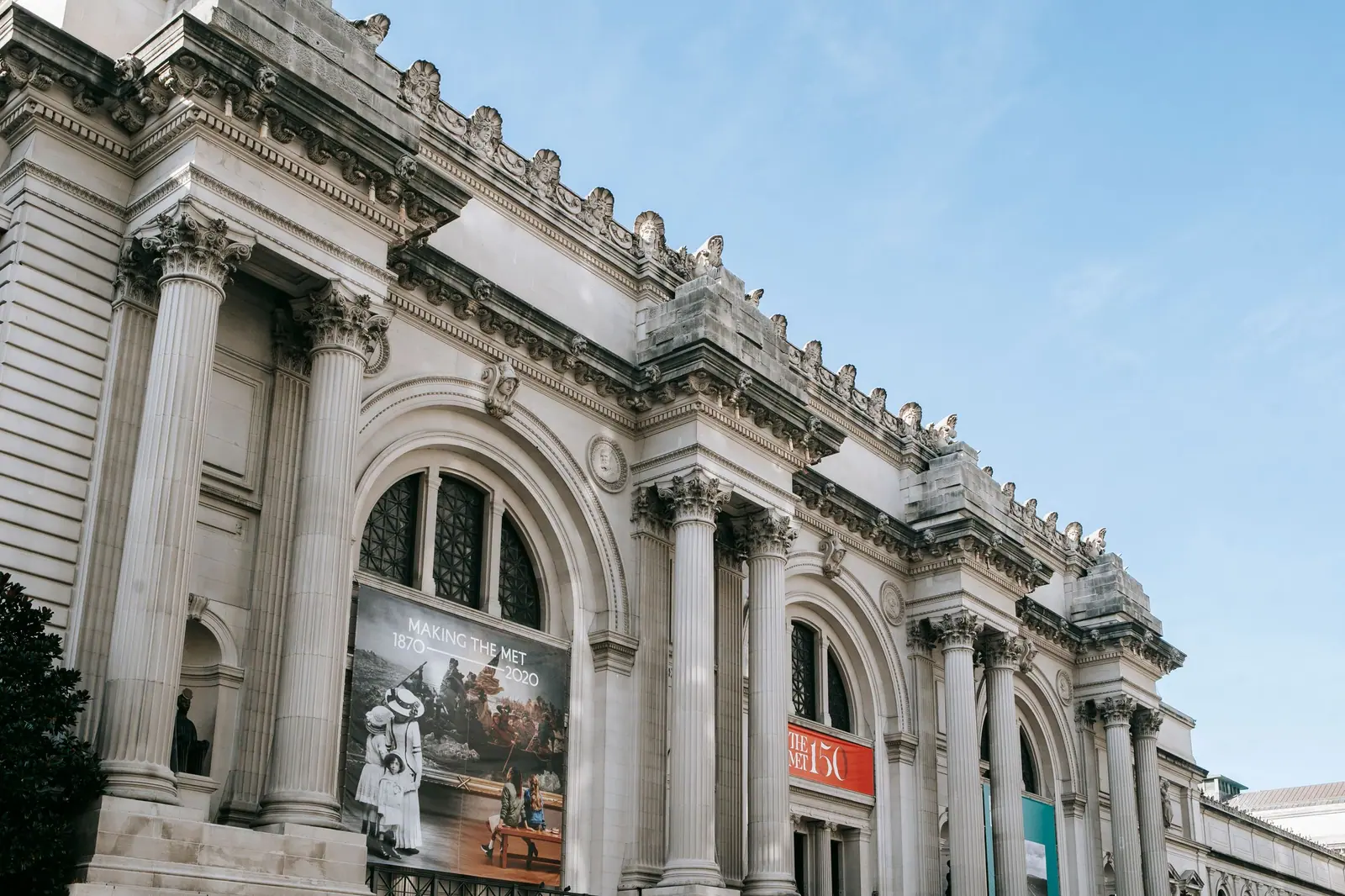
- Location
- Fifth Avenue at 82nd Street
- Neighborhood
- Upper East Side, Museum Mile
- Collection
- Five thousand years of art
- Nearby
- Central Park and Museum Mile
What the Met is
The Metropolitan Museum of Art stands on the east side of Central Park at Fifth Avenue and 82nd Street, the anchor of Museum Mile. It was founded in 1870 and moved to this site in 1880, and the building has grown around that core ever since. Today it is one of the largest art museums in the country, with galleries on several floors and a collection that runs from ancient Egypt to work made in the last few years.
The Fifth Avenue facade and its wide steps are a familiar meeting point, and the Great Hall inside sets the scale for what follows: long galleries, courtyards and staircases that connect the collection. The museum is a place to walk rather than a checklist, and the building rewards a loose plan. Two wings can fill a morning. Pick a handful of rooms you care about, then let the corridors between them carry you into something you did not expect.
What to see inside
Start with the Egyptian galleries, where the Temple of Dendur stands in a glass-walled hall looking out at Central Park. Greek and Roman sculpture, arms and armor, and the American Wing's period rooms are all within a short walk of each other, which makes a route easy to improvise. European paintings hang in long skylit rooms on the upper floors. Costume, drawings and other light-sensitive collections rotate, so what is on view changes through the year.
Go up rather than pressing into the ground-floor crowds. The upper floors hold European paintings and decorative arts, and they are usually quieter in the morning. If you travel with children, the armor and the Egyptian wing tend to hold attention longest. The roof garden opens in the warmer months and gives a view over Central Park; it is seasonal, so check the museum's own listing before you build a day around it.
- Egyptian art, including the Temple of Dendur in its glass-walled hall facing Central Park.
- European paintings, hung in long skylit rooms on the upper floors.
- Arms and armor, a collection that holds the attention of younger visitors.
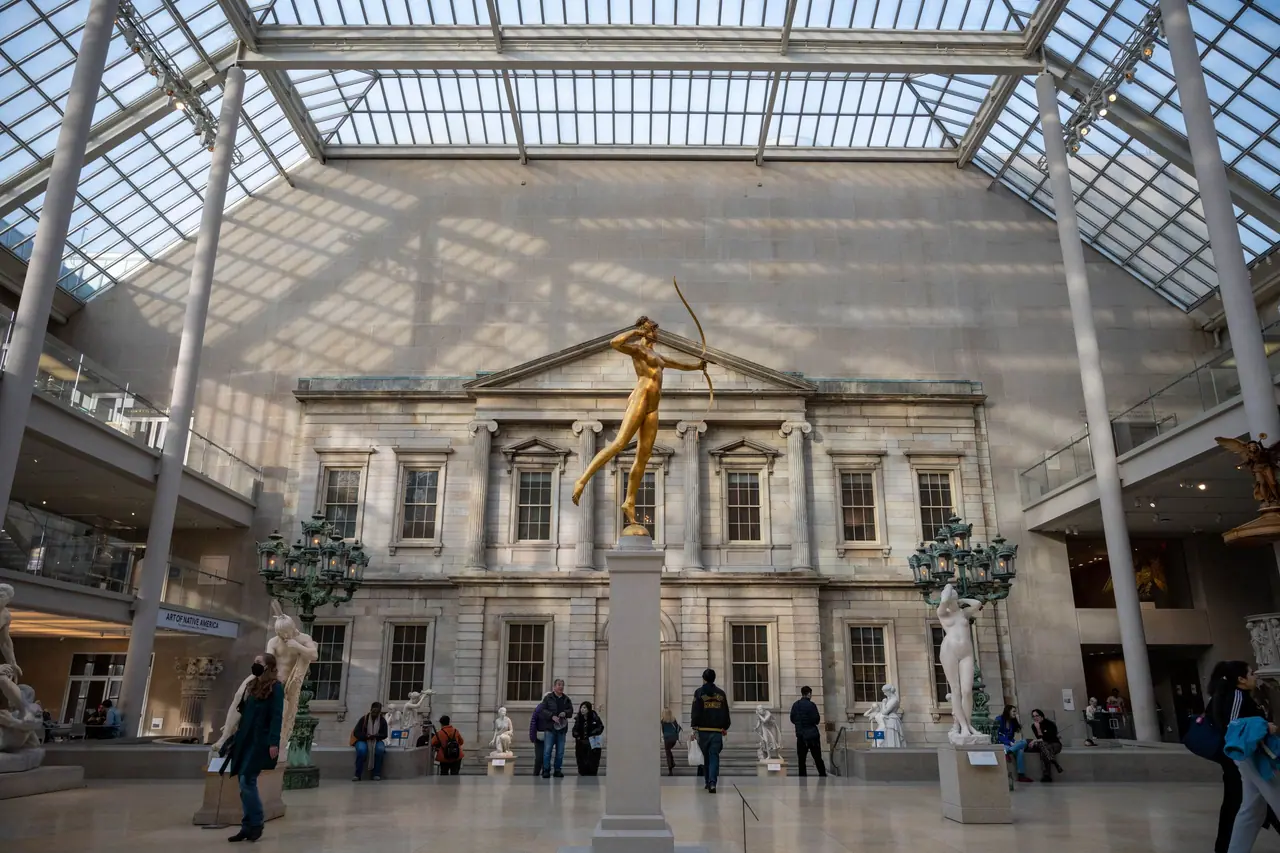
- The American Wing, with period rooms and a courtyard of American sculpture.
Getting there
The museum occupies the block between Fifth Avenue and Central Park at 82nd Street, so most visits combine a subway ride with a walk through the park or along the avenue. Subway stations sit a short walk east on Lexington Avenue and west at 81st Street on Central Park West; from either, the entrance is easy to find. Buses run across the park on the crosstown streets. Check current service before you travel, since routes and station work change.
From the airports, take public transport into Midtown and continue by subway or on foot. John F. Kennedy International Airport connects by AirTrain to Jamaica and Howard Beach, and Newark Liberty by AirTrain to the rail station at the airport. Allow about 45 to 75 minutes from Midtown depending on traffic and connections. A taxi or ride app is simplest with luggage, and congestion pricing applies to vehicles entering Manhattan below 60th Street, so check the current rules.
- Subway: stations east on Lexington Avenue and west at 81st Street on Central Park West.
- Walking: enter from Fifth Avenue, or cross Central Park from the west side.
- Bus: crosstown services cross the park on the streets nearby.
When to go and how long
Spring and autumn are the mildest seasons for the walk to the door, and the park outside is at its best then. Summer brings heat and humidity, so an air-conditioned gallery is a sensible afternoon. Winter is cold and the holiday weeks around late December are the busiest of the year; January and early February are quieter. Weekday mornings are calmer than weekends. Check the museum's own site for opening days, since they change with the season and holidays.
Allow half a day at the minimum; a full day passes easily once you are inside, and returning on a second day is common. A short visit works well if you choose one wing and stay there: the Egyptian galleries, or European paintings, or the American Wing. Late afternoon tends to thin out. If a ticketed exhibition is the reason for the trip, book a timed slot in advance and arrive a little early, since entry lines form quickly at popular shows.
Nearby sights
Central Park begins at the museum's doorstep. The paths north of 82nd Street lead through the park's quieter middle section, and the lawns and water near the Great Lawn are a short walk away. Museum Mile continues north along Fifth Avenue from roughly 82nd to 105th Streets, with other collections along the way. South of the museum, the park's edge along Fifth Avenue brings you toward the Upper East Side's residential streets and, eventually, Midtown.
The American Museum of Natural History is on Central Park West at 79th Street, a walk across the park or a short ride around it. The 86th Street transverse links the two sides of the park. North along Fifth Avenue, the Guggenheim continues the Museum Mile run, and the Cooper Hewitt and other collections sit within a few blocks. South, the park's edge leads toward the Upper East Side's galleries and, further on, Midtown's sights.
Practical tips and where to stay
Wear comfortable shoes, since the floors are hard and the distances between galleries add up. Bring a light layer: galleries can be cool in summer and warm in winter. Large bags are usually checked at the cloakroom. Photography rules vary by gallery, so check at the entrance; flash and tripods are generally not permitted, and some exhibitions ban photographs entirely. Food and drink are limited to designated areas, so plan a pause rather than a picnic among the paintings.
Carnegie Hill and Yorkville are the closest residential areas, both quiet in the evening and within walking distance of the museum. The Upper East Side around Lexington and Madison Avenues has the densest choice of places to stay, with good subway links south to Midtown. Staying in Midtown puts Broadway theaters, Grand Central Terminal and Penn Station within easy reach, and the ride uptown is short. Check the total price with taxes and fees, since New York hotel bills add city and state charges and sometimes a nightly facilities fee.
The Metropolitan Museum of Art: questions
Where is the Metropolitan Museum of Art?
The Metropolitan Museum of Art is on the east side of Central Park at Fifth Avenue and 82nd Street in Manhattan. It is the anchor of Museum Mile, the run of Fifth Avenue museums from roughly 82nd to 105th Streets. Subway stations on Lexington Avenue and at 81st Street on Central Park West are a short walk away.
How do you get to the Metropolitan Museum of Art?
Subway stations on Lexington Avenue and at 81st Street on Central Park West are a short walk from the doors, and crosstown buses cross the park on the streets nearby. Many visitors walk up from Midtown through Central Park or along Fifth Avenue. Check current service before you travel, since station work and routes change.
How long should you allow for the Metropolitan Museum of Art?
Allow half a day at the minimum. The Metropolitan Museum of Art is large enough that a full day passes easily, and many visitors return for a second look. A short visit works if you pick one wing, such as the Egyptian galleries or European paintings, and stay there. Late afternoon is usually calmer than the morning.
When is the quietest time to visit the Metropolitan Museum of Art?
Spring and autumn are the mildest seasons for the walk to the door, and weekday mornings are calmer than weekends. Summer heat makes an air-conditioned gallery a good afternoon plan. The holiday weeks around late December are the busiest of the year, while January and early February are quieter. Check the museum's own site for opening days and holiday closures.
Do you need a ticket for the Metropolitan Museum of Art?
An entry fee applies to the Metropolitan Museum of Art, and some special exhibitions need a timed ticket as well. Admission policy, including any reduced or free options, is set by the museum and can change, so check the current rules on its own site before you travel. Booking ahead saves time at popular shows.
Can you take photographs at the Metropolitan Museum of Art?
Photography rules at the Metropolitan Museum of Art vary by gallery. Flash and tripods are generally not permitted, and some exhibitions ban photographs entirely. Check the signs at each entrance and ask staff if you are unsure. Handheld pictures for personal use are usually fine in the permanent collection, but always follow what is posted in the room.
What is there to see near the Metropolitan Museum of Art?
Central Park is at the doorstep of the Metropolitan Museum of Art, and the American Museum of Natural History is on Central Park West at 79th Street, a walk or short ride away. Museum Mile continues north along Fifth Avenue, with the Guggenheim and other collections within a few blocks. Midtown's sights are a short subway ride south.
Where should you stay near the Metropolitan Museum of Art?
Carnegie Hill and Yorkville are the closest residential areas, and the Upper East Side around Lexington and Madison Avenues has the densest choice of places to stay, with fast subway links to Midtown. Staying in Midtown puts Grand Central Terminal and Penn Station within easy reach, and the ride up to the Metropolitan Museum of Art is short. Check the total price with taxes and fees.