
- Best time
- An hour before sunset
- Dress
- Smart casual
- Cocktails
- Pricier than street level
- Season
- May – October
Many of Manhattan’s best rooftop bars sit on top of hotels. Some are walk-in, some take reservations, and most get busy after work and at sunset. Check opening times before you go — many close or move indoors in winter.
Midtown
- 230 Fifth — a big, open rooftop facing the Empire State Building, with heated igloos in winter.
- The Press Lounge — Hell’s Kitchen, with views across the Hudson at sunset.
- Bar 54 — high above Times Square at the Hyatt Centric.
Downtown
- Le Bain — at The Standard, High Line, with a dance floor and views over the Hudson.
- Mr. Purple — at Hotel Indigo on the Lower East Side, looking back at Midtown.
- Overstory — a cocktail bar high in a Financial District tower; book ahead.
How to get in
Arrive before 6 pm on weekdays to skip the line, or book where reservations are offered. Many hotel rooftops ask for smart-casual dress — no gym wear or flip-flops — and some check ID for everyone.
On a budget
For a free skyline view, ride the Staten Island Ferry at dusk or walk the Brooklyn Bridge. For one view with a drink in hand, a sunset slot at an observation deck is the other way up.
Reading a Skyline View
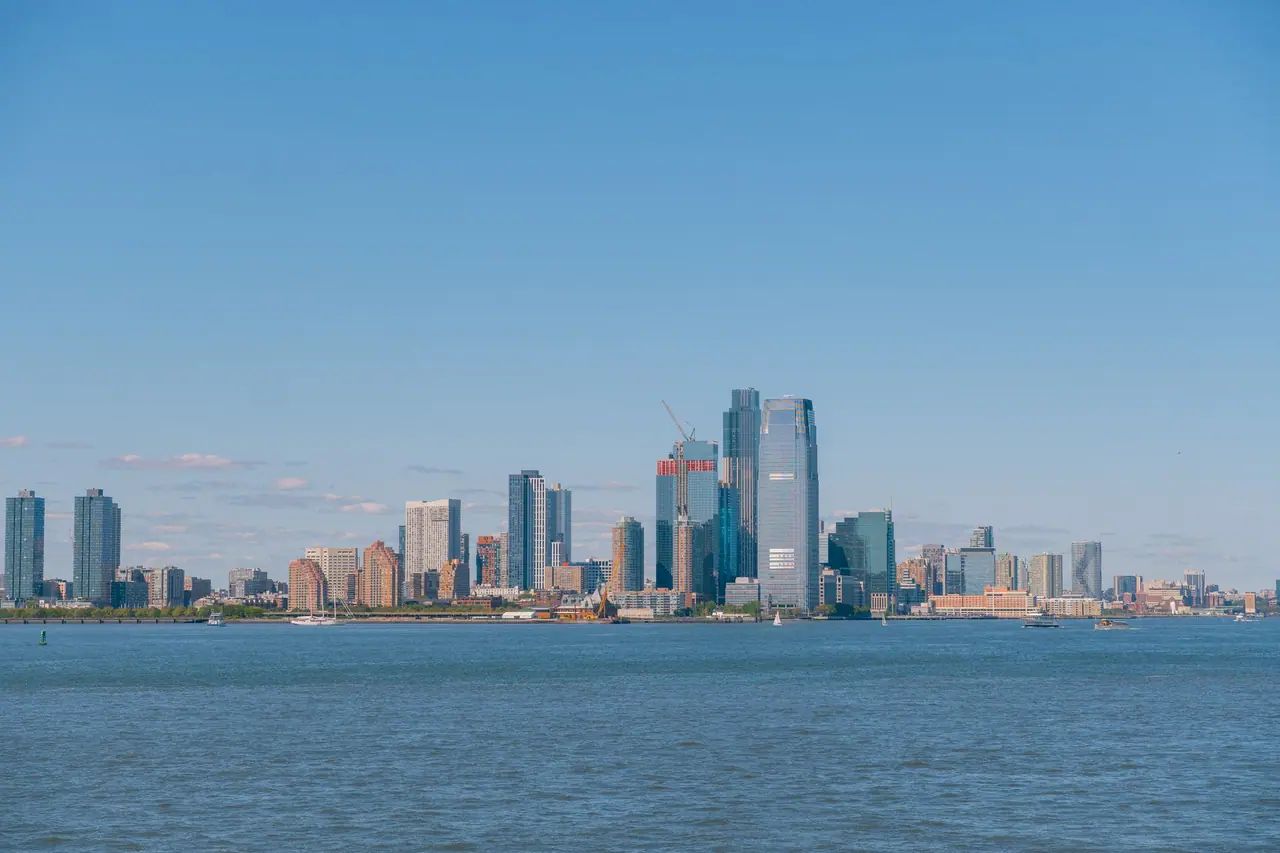
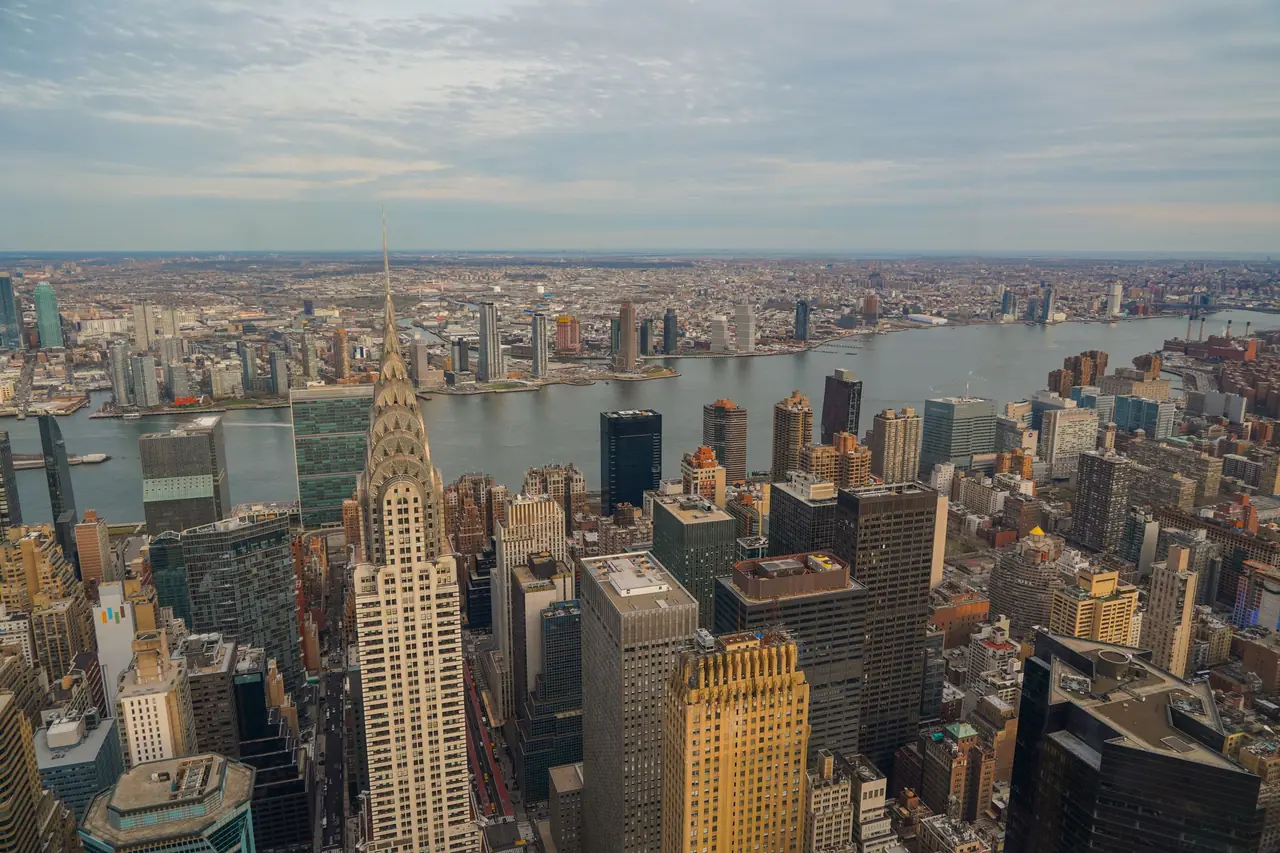
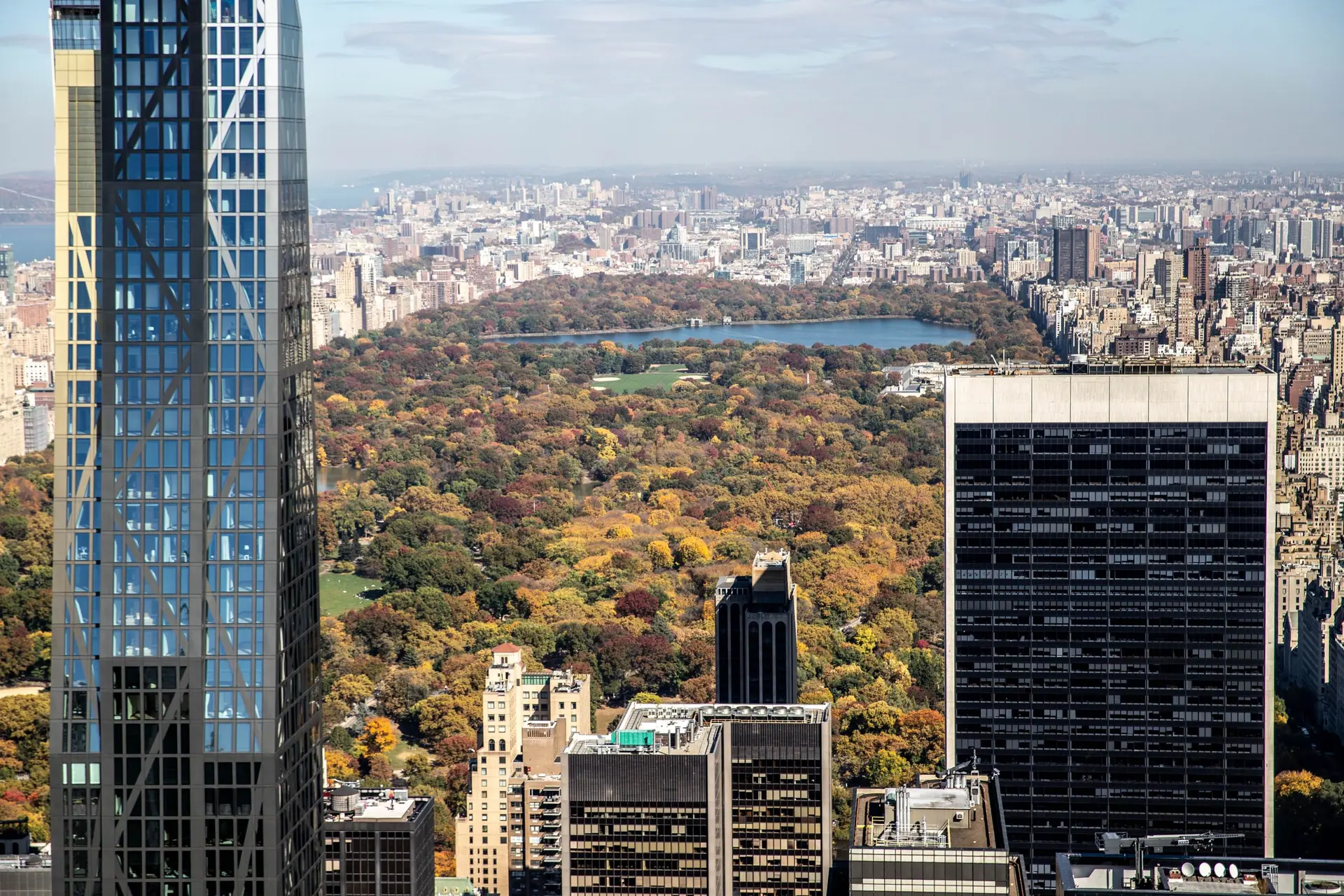
A terrace is only as good as its sightline. Before choosing a space, decide which skyline matters: the Midtown towers, the harbor and One World Trade Center, or the green sweep of Central Park. The direction a roof faces settles the question. A south-facing terrace in Midtown looks at a different city than a north-facing one a few blocks away. A map and a compass reading on your phone will tell you which way a terrace runs before you commit to an evening there.
Height is not the same as a clear view. A lower roof with an open edge often beats a higher one set behind glass, and glass panels catch reflections after dark. Setbacks, water towers and neighboring buildings interrupt sightlines in ways a photograph from street level will not show. Look for images taken from the terrace itself, not of it, and note whether the space is open air, covered, or fully enclosed with windows. That detail changes the evening more than the floor number does.
Wind, Weather and Timing
Wind is the practical difference between a street and a roof. Air moves faster at height, and the temperature on an exposed terrace usually sits a few degrees below the sidewalk, more once the sun has gone. A light layer helps even in summer. Rain plans matter too: ask whether a covered area stays open, whether a booking moves indoors, and how the venue handles a sudden change in weather. Summer afternoons can bring thunderstorms, so a backup plan is worth having.
Timing shapes a visit as much as the view. Early weekday evenings tend to be calmer than Friday and Saturday nights, when queues build before sunset. December is the busiest holiday period in the city, and January to early March is usually the quietest, though some roofs are closed then. Sunset moves through the year, so check the time for your date and arrive with room to spare, especially on Manhattanhenge evenings. Weeknights in spring and autumn often give the easiest balance of light, warmth and space.
Keep reading
Rooftop bars worth the elevator: questions
When is the best season for rooftop bars in Manhattan?
Spring and autumn are the mildest seasons, which makes April to June and September to November the most comfortable for an open-air terrace. Summer is hot and humid, though evenings bring relief. Winter limits many roofs to enclosed or heated areas, and some close entirely. Check opening days with the venue before you plan an evening.
Do rooftop bars in Manhattan take reservations?
Policies vary by venue and by season. Popular terraces fill quickly around sunset and on weekend evenings, when a booking helps. Smaller roofs often keep part of the space for walk-in guests earlier in the evening. Ask the venue directly about reservations, minimum group sizes and what happens if it rains.
How do views differ between rooftop bars in Manhattan?
Direction matters more than height. Terraces facing south take in the harbor, the Financial District and One World Trade Center. North-facing roofs look toward Midtown and the Empire State Building. West-side terraces catch the Hudson River and sunsets over New Jersey, while east-facing ones show the East River and the bridges. Central Park is the reward for roofs along its edges.
What should you wear to rooftop bars in Manhattan?
Layers work best. A roof is windier and cooler than the street below, even on a warm evening, and the temperature drops once the sun is gone. Comfortable shoes help with stairs and narrow terraces. Some venues set a dress code, so check before you go, especially for evening bookings and groups.
Is Manhattanhenge visible from rooftop bars in Manhattan?
Sometimes. The sunset alignment with the cross streets happens a few days a year, usually in late May and mid-July. A terrace needs a clear line of sight straight down an east-west street, which low roofs near wide cross streets often provide and high roofs rarely do. Dates shift, so check the schedule and the weather first.
Are rooftop bars in Manhattan open during winter?
Some are, in modified form. Terraces may be enclosed with clear panels, fitted with heaters and blankets, or reduced to a smaller covered area. Others close for the season and reopen in spring. Winter also brings the holiday period, when December is the busiest time of year in the city, so an enclosed roof can be crowded. Confirm seasonal arrangements with the venue.
When should you arrive at rooftop bars in Manhattan for sunset?
Arrive well before the sun goes down, not at the moment it does. Sunset moves through the year, late in summer and early in winter, so check the time for your date. Weekday evenings are usually calmer than Fridays and Saturdays. If the roof has a queue, allow extra time. Light after sunset often draws a second crowd.
How do you reach rooftop bars in Manhattan without a car?
The subway runs around the clock and most terraces sit within a short walk of a station. Tap a contactless card or phone to pay. Congestion pricing applies to vehicles entering Manhattan below 60th Street, which is another reason to leave the car behind. Walking between roofs in the same neighborhood is often quicker than riding.