
Free ferries and harbor views
The Staten Island Ferry leaves from Whitehall Terminal at the southern tip of Manhattan and costs nothing to ride. The crossing takes about 25 minutes each way and passes the Statue of Liberty, which makes it one of the few harbor crossings in the city that cost nothing. Walk on, find a place on the open deck, and check the current timetable with the operator before you build a day around it. The ferry runs around the clock.
Battery Park sits just north of the terminal, free and open, with benches facing the water and the ferries coming and going. From the waterfront paths you can see the Statue of Liberty and Ellis Island without buying a ticket; the ticketed boats to both leave from Battery Park, and a place along the rail gives most of the same view. The 9/11 Memorial is a short walk north, and its two reflecting pools are free to visit.
The free acres of Central Park
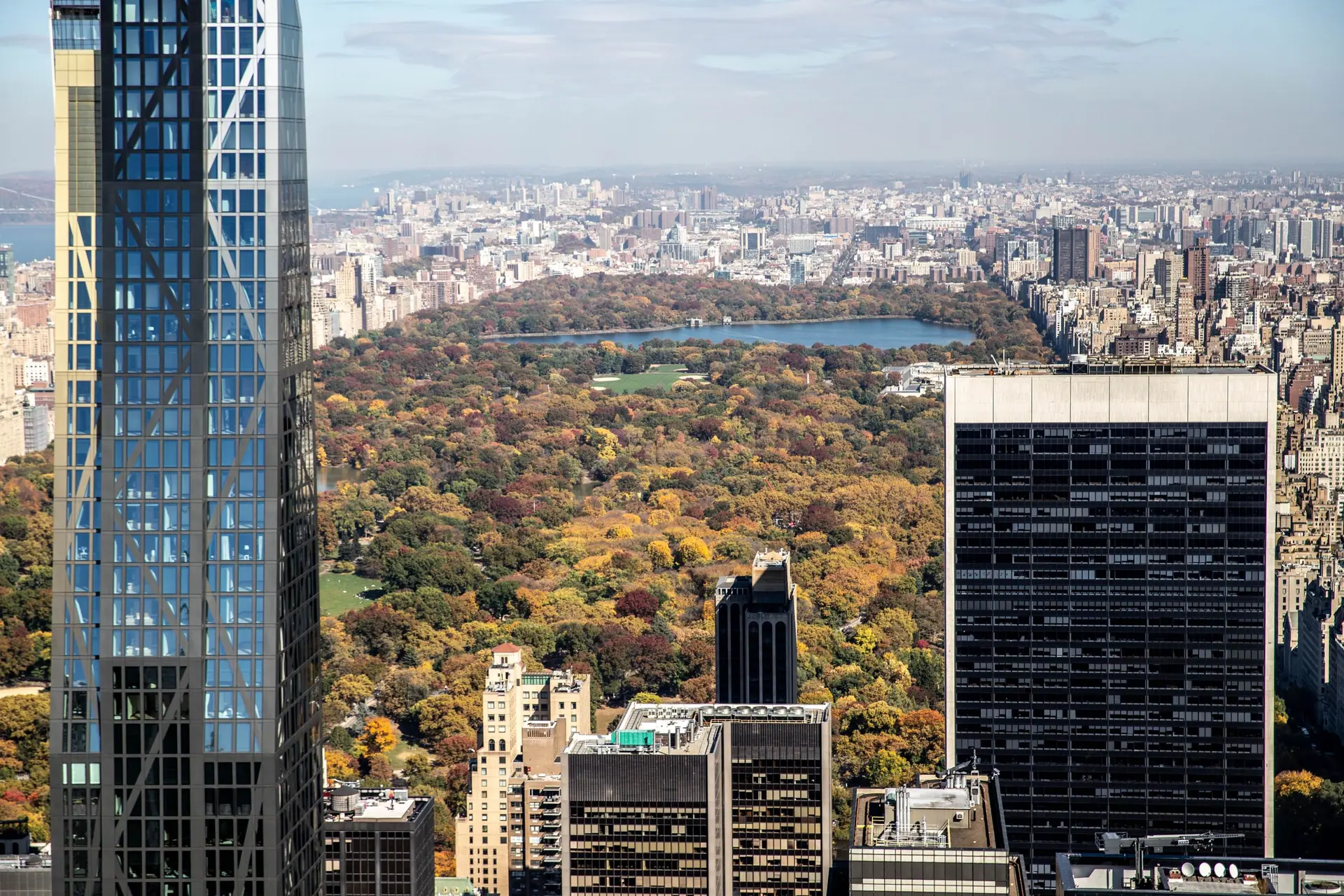
Central Park covers 843 acres between 59th and 110th Streets, from Fifth Avenue to Central Park West, and entry is free. Frederick Law Olmsted and Calvert Vaux designed it, and the first section opened in 1858. Lawns, paths, bridges and a large lake fill the middle of the island, and none of it requires a ticket. The southern edge near 59th Street draws the most people, and the paths further north are usually quieter.
The park changes with the season and stays free through all of them. Autumn color usually peaks in early to mid November, spring brings the first leaves in April, and summer afternoons are hot and humid, so shade and water matter. Winter is cold, with snow in some years, and the park is at its quietest in January and February. Maps are posted at the main entrances, and the park's official site lists closures and events.
The High Line and the West Side
The High Line is an elevated park built on a former freight rail line on the West Side, running from Gansevoort Street to West 34th Street at Hudson Yards. The first section opened in 2009, and entry is free. The planting, the old tracks and the views into the surrounding blocks make it a walk rather than a destination, so allow time to stop. It is narrow in places and busy in the middle of the day, so early morning is easier.
At the northern end, Hudson Yards and the edge of the Theater District are a short walk away. At the southern end, Gansevoort Street puts you in the West Village, where the streets are older, named and irregular, and a walk costs nothing. Hudson River Park runs along the water on the same side of the island, with a continuous path, lawns and piers, all free and open. A loop using both is one of the easiest free afternoons in Manhattan.
Bridges you can walk across
The Brooklyn Bridge carries a raised walkway above the traffic, and walking it costs nothing. The path starts near City Hall on the Manhattan side and crosses to Brooklyn over the East River, with the harbor behind you and the bridge's stone towers ahead. Go early, before the crowds and the heat, and keep to the marked pedestrian lane, because cyclists use the same crossing and move fast. The walk is exposed, so sun, wind and rain all matter.
The Manhattan and Williamsburg Bridges also have pedestrian paths over the East River, with different views and fewer people. Entrances are not always obvious from street level, and some are closed for repairs, so check the city's bridge information before setting out. Late afternoon light is the reward: Manhattanhenge, when the sunset lines up with the cross streets, falls a few days a year in late May and mid-July and costs nothing to watch from a corner.
Galleries and museum hours
Commercial art galleries in Chelsea and on the Lower East Side are free to enter, and nobody expects you to buy anything. Chelsea's galleries cluster in the west 20s, mostly west of Tenth Avenue, often several to a building. The Lower East Side has smaller rooms on and around Orchard and Ludlow Streets. Hours vary, most spaces close one or two days a week, and shows change on a rolling schedule, so check a few listings before crossing town.
Museums are a different calculation. The Metropolitan Museum of Art on Fifth Avenue at 82nd Street and the American Museum of Natural History on Central Park West at 79th Street both charge admission for most visitors, and the amount and any free or suggested-admission windows change. Check each museum's own site for the week you plan to visit. Smaller galleries inside museums, university galleries and library exhibition rooms often cost nothing, and they fill a wet afternoon.
The Financial District on foot
The 9/11 Memorial's two reflecting pools are free to visit, and the museum beside them is ticketed. Trinity Church and its churchyard sit a few blocks south, free to enter, though services take priority over visitors. Federal Hall National Memorial on Wall Street is free, and so is the walk along Wall Street itself and down to Bowling Green. The bronze bull at Bowling Green is public sculpture, free to see, and busy with photographers most of the day.
City Hall Park, a few blocks north, is free and gives a lawn and benches between the courts and the Brooklyn Bridge approach. The streets around South Street Seaport and the waterfront beside them are free to walk, with the East River on one side and the bridge overhead. The Financial District is quiet at weekends, when offices empty and the streets belong to visitors; weekdays are busier but the same walks work. Check opening days for any building you want to enter.
Keep reading
Questions
Which free things to do in Manhattan are close to the Financial District?
Start at Whitehall Terminal at the southern tip of Manhattan, where the Staten Island Ferry is free. Battery Park, the two reflecting pools at the 9/11 Memorial, Trinity Church and its churchyard, Federal Hall and City Hall Park are all within walking distance, and the Brooklyn Bridge walkway begins a few blocks north. Check opening days for any building you plan to enter.
Are Central Park and the High Line free things to do in Manhattan?
Both are free. Central Park covers 843 acres between 59th and 110th Streets, from Fifth Avenue to Central Park West, and entry costs nothing at any gate. The High Line is an elevated park on a former freight rail line, running from Gansevoort Street to West 34th Street at Hudson Yards. Check the High Line's opening hours, which change with the season.
Does the Staten Island Ferry count among the free things to do in Manhattan?
The ferry is free, and it is one of the simplest free things to do in Manhattan with a harbor view. Boats leave from Whitehall Terminal at the southern tip of the island, the crossing takes about 25 minutes each way, and the route passes the Statue of Liberty. Service runs around the clock. Check the current timetable before you go.
Are art galleries among the free things to do in Manhattan?
Commercial galleries in Chelsea and on the Lower East Side are free to enter, and there is no expectation to buy. Chelsea's rooms cluster in the west 20s, mostly west of Tenth Avenue, while the Lower East Side has smaller spaces around Orchard and Ludlow Streets. Hours vary and most close one or two days a week, so check a few listings before crossing town.
Can you walk the Brooklyn Bridge as one of the free things to do in Manhattan?
Walking the Brooklyn Bridge is free and counts among the most useful free things to do in Manhattan on a clear morning. The raised walkway begins near City Hall on the Manhattan side and crosses the East River to Brooklyn, with the harbor behind you. Keep to the pedestrian lane, because cyclists move fast, and check the city's bridge information for closures before setting out.
Do any museums offer free things to do in Manhattan?
Some do, but rules vary. The Metropolitan Museum of Art on Fifth Avenue at 82nd Street and the American Museum of Natural History on Central Park West at 79th Street charge admission for most visitors, and free or suggested-admission windows change. Check each museum's own site for the week you plan to visit. University galleries and library exhibition rooms often cost nothing.
How can a wet day be filled with free things to do in Manhattan?
Rain does not end the free things to do in Manhattan. Commercial galleries in Chelsea and on the Lower East Side welcome walk-ins, library exhibition rooms and university galleries usually cost nothing, and the interiors of the Financial District churches are free to enter between services. The Staten Island Ferry has covered decks and runs in most weather. Check opening days, since many galleries close early in the week.
What should you check before planning free things to do in Manhattan?
Check hours and access before you set out. The High Line opens and closes on a seasonal schedule, bridge paths close for repair work, ferry timetables change, and museum admission rules are revised. Weather matters too, since parks, bridges and the ferry are outdoors. Free things to do in Manhattan reward a quick check of official sites the day before, and most need no booking at all.